Overview
Hair
Transplant
Turkey

Surgeon-led hair restoration clinic in Levent, Istanbul since 2007.

Explore all →
Lorew Paris
Premium hair care by Hairmedico
Discover →
Confidential · Free
Bespoke Assessment by Dr. Arslan

Send 3–5 photographs. Personal response within 24 hours — no intermediaries.

Request Now →
17+
Years
1
Patient/day
Surgery
Techniques
& Procedures

Selected for your specific hair loss pattern and aesthetic goals.

FUE vs DHI →
Interactive Tool
Which Technique Is Right for You?

FUE, DHI or Algorithmic FUE™ — Dr. Arslan recommends based on your photographs and Norwood stage.

Get Assessment →
Try Graft Calculator →
Why Turkey
World-class
surgery.
Local price.

FUE Europe member. Ministry of Health accredited clinic. Levent, Istanbul — 60–80% less than UK or US.

View Package →
The Surgeon
Dr. Arslan
Musbeh

FUE Europe member. Ministry of Health accredited. 17+ years. 4,500+ personal procedures. One patient per day.

Full Profile →
Dr. Arslan · Istanbul
"One patient. One day. No exceptions."

Every graft personally placed. Every result personally accountable.

Read Philosophy →
17+
Years
4,500+
Cases
FUE
Europe
Pricing
All-Inclusive
Packages

No hidden costs. Hotel, transfers, surgery and aftercare in one price.

View Pricing →
Most Chosen
VIP — FUE–DHI

Silver · Gold · VIP — 5-star hotel · Airport transfers · PRP included

View Pricing →
Graft Calculator →
Results
Real
Before
& After

Every case personally performed by Dr. Arslan Musbeh.

Full Gallery →
Non-Surgical
Beyond
Surgery

Not every case needs a transplant. Medical treatments, therapies and specialist options.

Overview →
Medical Education
Learn
before
you decide.

Guides, tools and expert content — written by Dr. Arslan Musbeh.

All Articles →
Bespoke Assessment WhatsApp
Hair Transplant
Hair Transplant Turkey
Techniques
Techniques
Procedures
Why Turkey
Country Comparisons
Non-Surgical
Medical Treatments
Learn
Guides & Tools
Clinic Dr. Arslan Musbeh Pricing & Packages Before & After About Hairmedico Contact
MoH Accredited
1 Patient / Day
Reviews
Hairmedico Blog Technique Guides FUE vs DHI
Afro Hair Transplant

CCCA & Hair Transplant —
What Black Women Need to Know

Dr. Arslan Musbeh — Afro Hair Specialist·April 2026·~10 min
CCCA & Hair Transplant — Central Centrifugal...
Dr. Arslan Musbeh
Dr. Arslan Musbeh
Hair Transplant Surgeon · Afro Hair Specialist · Founder, Hairmedico
FUE Europe Full Member ✓ · Ministry of Health Accredited · 17+ Years · 4,500+ Cases
April 2026 PublishedApril 17, 2026 Last updatedDr. Arslan Musbeh Medical review~10 min Reading time

What is CCCA?

Central Centrifugal Cicatricial Alopecia (CCCA) is a progressive scarring hair loss condition that begins at the crown of the scalp and spreads outward in a centrifugal (radiating outward) pattern. It almost exclusively affects Black women, with estimates suggesting it affects up to 17% of Black women in the United States.
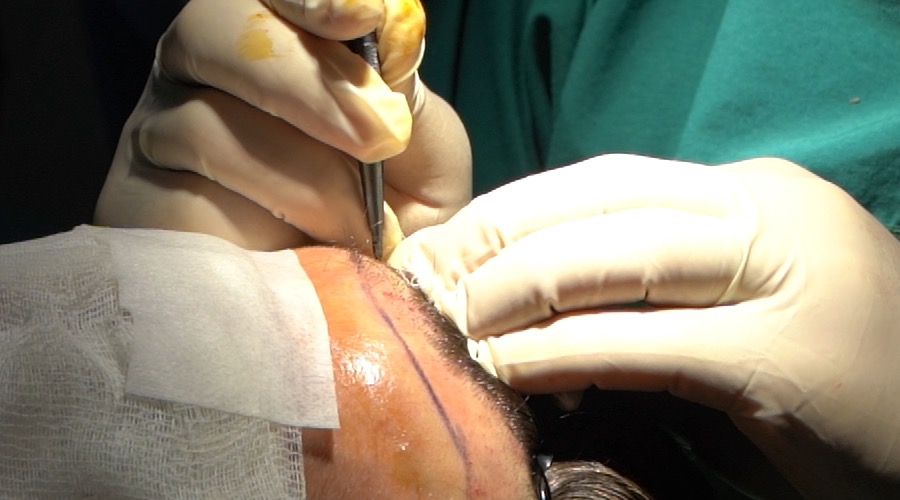
Hair transplant surgeon consultation and planning session
Hairmedico Istanbul — Hair transplant surgeon consultation and planning session

CCCA causes permanent hair loss because the inflammatory process destroys the hair follicle and replaces it with scar tissue (fibrosis). Unlike androgenetic alopecia — where the follicle miniaturises but survives — in CCCA the follicle is permanently eliminated. Once an area has fully scarred, no medical treatment can restore follicle function.

The condition is associated with: tight hairstyling practices (particularly chemical relaxers combined with heat and tension), possible genetic predisposition, and certain hair care products. Its exact aetiology remains under active research.

Dr. Arslan Musbeh
✦ Afro Hair Transplant Specialist
Dr. Arslan Musbeh — Afro & Textured Hair Expert
Dr. Arslan Musbeh has treated patients with Afro-textured, Type 3C–4C and tightly coiled hair from West Africa, Central Africa, the UK, France and the Caribbean. His adapted FUE technique accounts for the C-shaped follicle curvature unique to Afro hair — minimising transection rates that conventional punches cannot avoid. As a FUE Europe Full Member with 17+ years and 4,500+ personal cases, Dr. Arslan is one of the few Istanbul surgeons with documented expertise specifically in Afro-textured hair restoration.
✓ FUE Europe Member ✓ Curved follicle extraction ✓ Type 4 / 4C hair ✓ Traction & CCCA cases

When is hair transplant possible for CCCA?

Hair transplant for CCCA is possible — but only under very specific conditions:

The disease must be inactive. Active CCCA involves ongoing follicular inflammation that will destroy newly transplanted grafts just as it has destroyed the native follicles. A minimum of 12–24 months of confirmed disease inactivity is required before surgery is considered. Inactivity is confirmed by scalp biopsy or trichoscopy examination showing no active inflammation.

The donor area must be unaffected. CCCA primarily affects the crown and vertex. In most patients, the donor zone at the back and sides of the scalp remains fully intact and available for harvest.

Realistic expectations are essential. Transplanting into scarred scalp tissue produces lower graft survival rates (typically 70–85%) than transplanting into healthy tissue. Patients must understand that the result may require a second session to achieve adequate density.

Medical treatment before surgery consideration

Before any surgical consultation for CCCA, dermatological management is required to halt disease progression. Current treatment options for active CCCA include: topical and intralesional corticosteroids, oral tetracycline antibiotics (doxycycline), topical calcineurin inhibitors, and low-dose oral minoxidil to protect non-scarred hair.

Ccca Hair Transplant Black Women Guide — Hairmedico Istanbul
Hairmedico Istanbul — Post-operative scalp care and recovery protocol

Dr. Arslan coordinates with the patient's dermatologist or trichologist before planning any CCCA case. The surgical and medical teams must confirm disease inactivity before a consultation for transplant surgery is scheduled.

Dr. Arslan's CCCA protocol at Hairmedico

Hairmedico accepts CCCA consultations from Black women who have achieved documented disease remission. Dr. Arslan's protocol for CCCA cases includes: review of biopsy results or trichoscopy documentation of inactivity; a test session of 100–150 grafts with 3-month observation before a full procedure; DHI technique for placement into the scarred recipient zone; and extended 12-month follow-up with monthly photograph review to detect any recurrence of inflammation that would threaten the transplanted grafts.

Free Afro Hair Assessment
Send 3 photos. Dr. Arslan evaluates your case within 24h.
Specialist in Afro-textured, Type 3C–4C and curved follicle hair
WhatsApp Dr. Arslan →

Frequently Asked Questions

Can women get hair transplants?

Yes. Women are good candidates when hair loss meets clinical criteria: stable pattern, adequate donor density, appropriate underlying cause (genetic, traction, post-inflammatory). DHI technique is often preferred for women as it works between existing hairs without requiring full shaving.

What causes hair loss in women that hair transplant treats?

Female androgenetic alopecia (Ludwig pattern), traction alopecia from tight hairstyles, and post-inflammatory hair loss from inactive scarring alopecia are the main treatable causes. Diffuse telogen effluvium and active autoimmune alopecia require medical management before considering surgery.

Do women need to shave their head for hair transplant?

Not with DHI technique. Hairmedico's unshaved DHI places grafts between existing hairs without cutting surrounding hair. The transplanted hair integrates naturally and the procedure is completely discreet during recovery.

How many grafts does a women's hair transplant require?

This varies significantly by pattern. Frontal hairline thinning: 800–1,500 grafts. Diffuse thinning over the entire top: 2,000–3,500 grafts. Traction alopecia in the temple and edge zone: 500–1,200 grafts. Trichoscopy assessment provides a precise recommendation.

Frequently Asked Questions

How much does a hair transplant cost in Turkey?

Hairmedico all-inclusive: price on request for 2,000–3,500 grafts including surgery, 5-star hotel, transfers, PRP and 12-month follow-up.

Is hair transplant permanent?

Yes. Transplanted follicles are DHT-resistant and grow permanently for the patient's lifetime.

What is the recovery time?

Desk work: 5–7 days. Scabs shed by Day 10–14. New growth from months 3–5. Final result months 12–14.

Who performs surgery at Hairmedico?

Dr. Arslan Musbeh personally — every extraction, every channel, every graft. One patient per day.

Is Turkey safe for hair transplant?

Yes, with an accredited surgeon-led clinic. Verify FUE Europe membership, Ministry of Health registration, and confirm the surgeon personally operates.

References & Sources
  1. Kyei A et al. Hair transplantation in CCCA in African American women. PubMed. 2014. https://pubmed.ncbi.nlm.nih.gov/25207763/
  2. Callender VD, McMichael AJ. Central centrifugal cicatricial alopecia: clinical presentation, pathology and management. Dermatologic Therapy. 2004. https://doi.org/10.1111/j.1396-0296.2004.04032.x
  3. NHS. Hair loss conditions — alopecia overview. National Health Service. 2023. https://www.nhs.uk/conditions/alopecia/
  4. Umar S. FUE in patients of African descent: skin-responsive technique. PMC / NCBI. 2023. https://pmc.ncbi.nlm.nih.gov/articles/PMC10521773/
  5. Callender VD et al. Hair transplantation as second-line treatment for traction and centrifugal cicatricial alopecia in Black women. Dermatology Times. 2020. https://dermatologytimes.com/view/alopecia-option-black-women

All references are peer-reviewed medical literature or official health authority publications. No commercial sources included.

Afro Hair Assessment

Dr. Arslan Musbeh — Afro hair specialist. Send 3 photos for a personal evaluation within 24h.

WhatsApp →

Dr. Arslan Musbeh

  • ✓ Afro hair specialist
  • ✓ FUE Europe Full Member
  • ✓ Curved follicle extraction
  • ✓ 4C / Type 4 experience
  • ✓ 17+ years · 4,500+ cases

Related articles