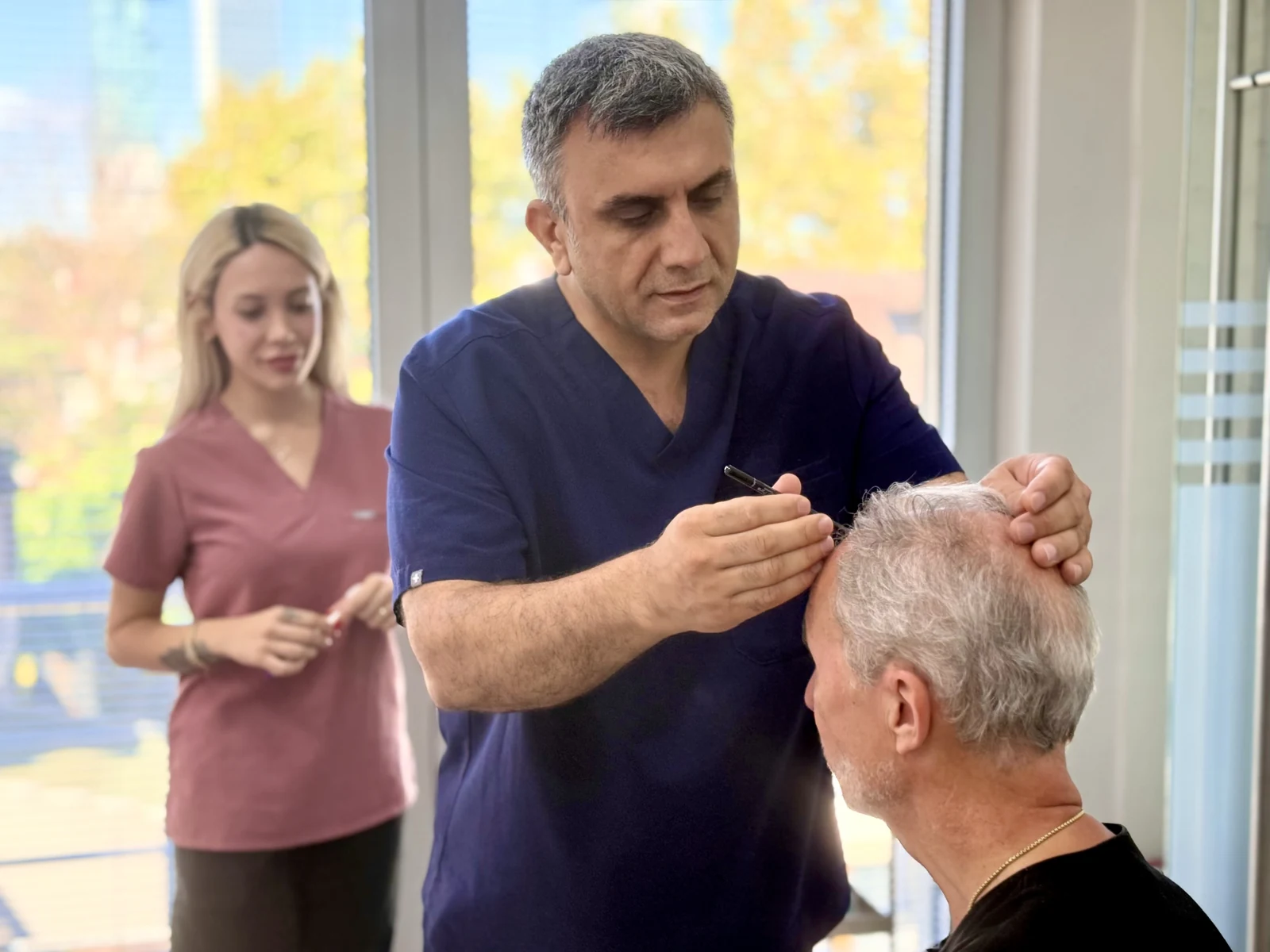
01 · Bespoke Assessment
Free photo review
Submit three photographs. Dr. Arslan reviews every case personally within 24 hours and tells you plainly whether surgery is the right next step.
Surgeon-led hair restoration clinic in Levent, Istanbul since 2005.
Explore all →Send 3–5 photographs. Personal response within 24 hours — no intermediaries.
Request Now →Selected for your specific hair loss pattern and aesthetic goals.
FUE vs DHI →FUE, DHI or Algorithmic FUE™ — Dr. Arslan recommends based on your photographs and Norwood stage.
Get Assessment → Try Graft Calculator →FUE Europe member. Ministry of Health accredited clinic. Levent, Istanbul — 60–80% less than UK or US.
View Package →FUE Europe member. Ministry of Health accredited. 17+ years. 3,000+ personal procedures. One patient per day.
Full Profile →One patient a day, every package surgeon-led. Every result personally accountable.
Read Philosophy →No hidden costs. Hotel, transfers, surgery and aftercare in one price.
View Pricing →Silver · Gold · VIP — 5-star hotel · Airport transfers · PRP included
View Pricing → Graft Calculator →Every case personally overseen by Dr. Arslan Musbeh, from consultation to results.
Full Gallery →Not every case needs a transplant. Medical treatments, therapies and specialist options.
Overview →Guides, tools and expert content — written by Dr. Arslan Musbeh.
All Articles →Afro-textured follicles curve beneath the skin, while a standard punch is cylindrical — Dr. Arslan Musbeh adapts angle, punch size and extraction speed to each patient’s hair characteristics.
The Process
From your first photographs to a full result at 12 months, with Dr. Arslan Musbeh involved at every stage.
01 · Bespoke Assessment
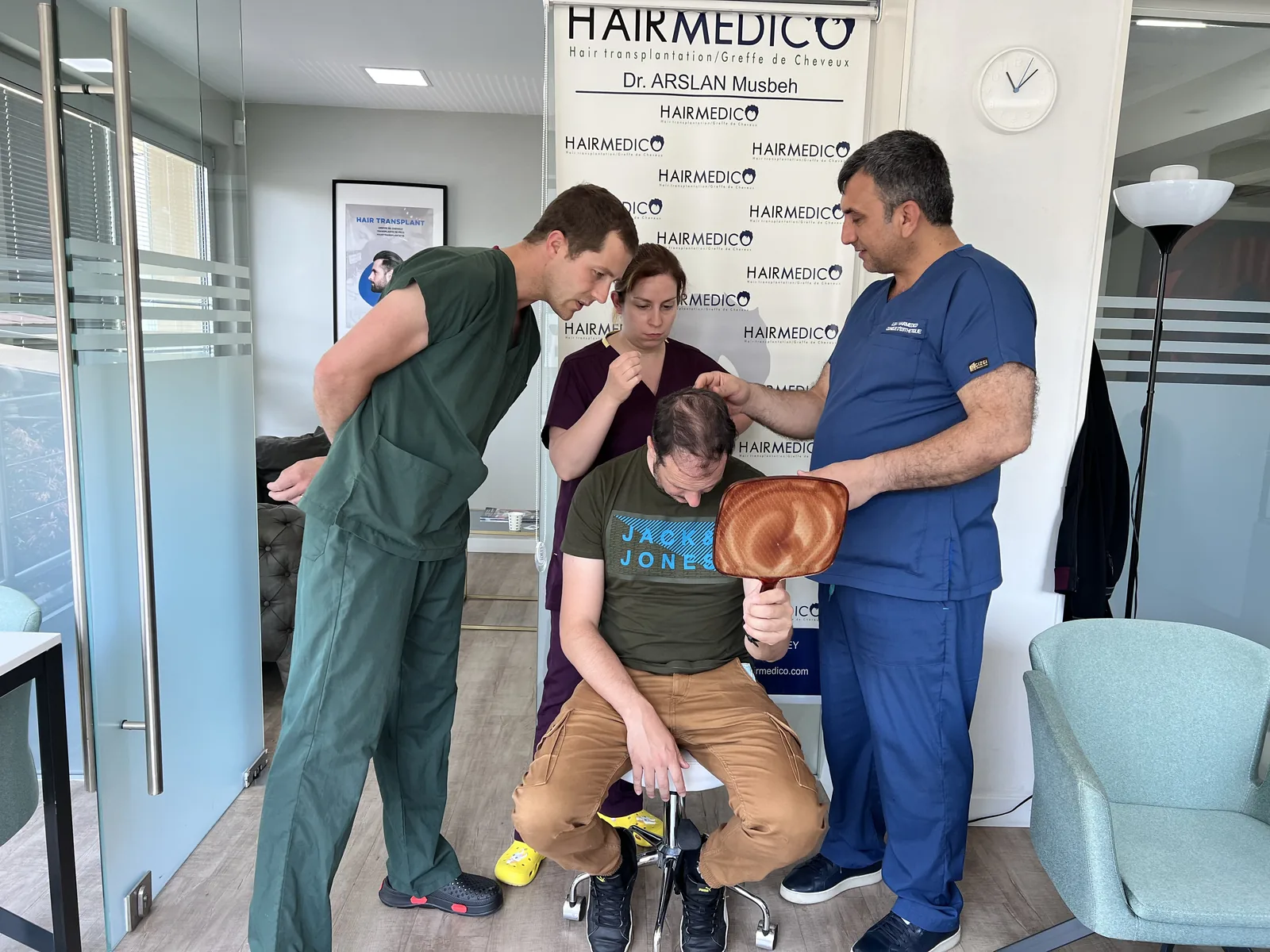
Submit three photographs. Dr. Arslan reviews every case personally within 24 hours and tells you plainly whether surgery is the right next step.
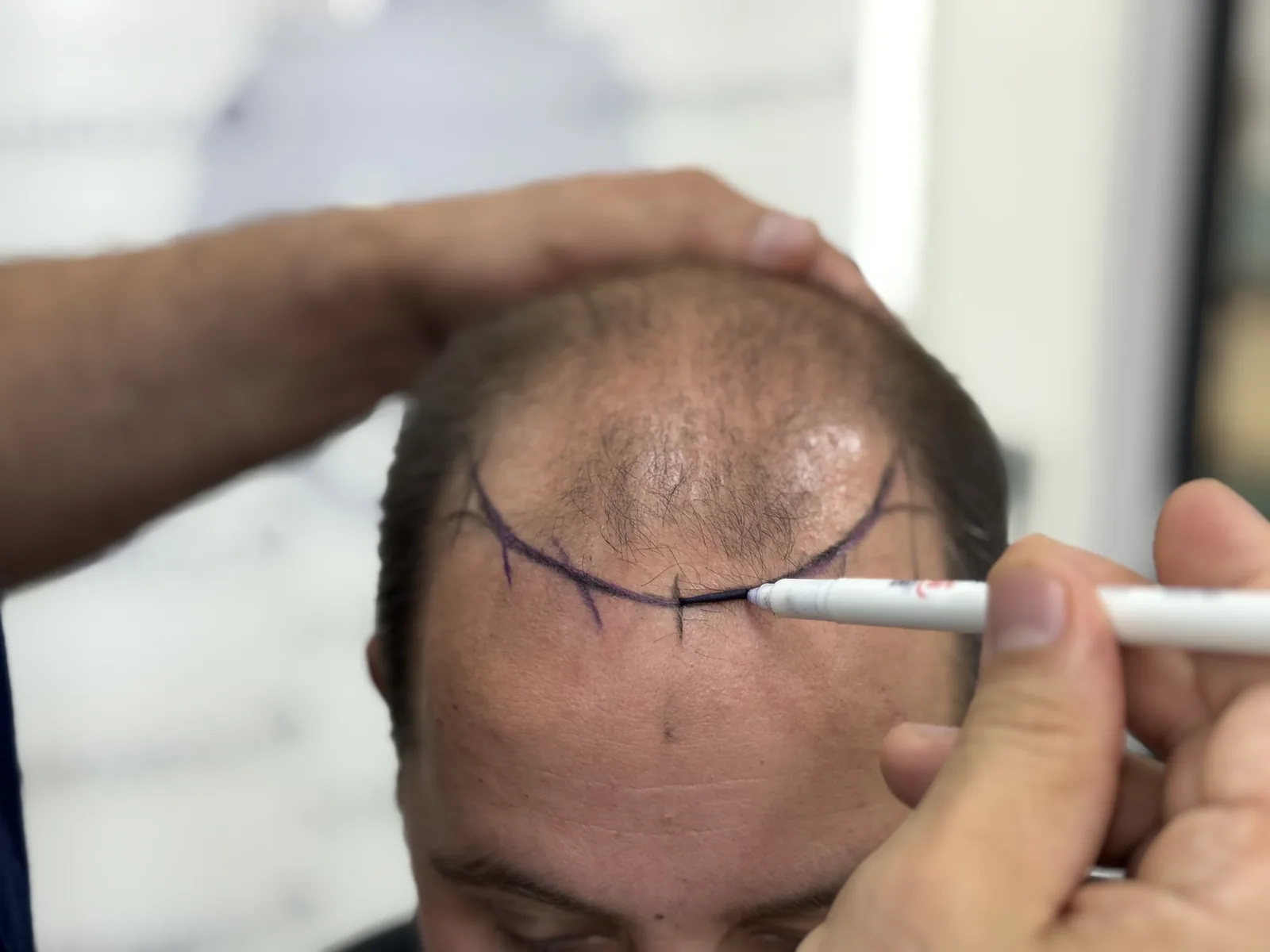
02 · Technique & Plan
FUE, DHI or Algorithmic FUE™ is confirmed by the surgeon directly, with a graft estimate and a fixed, all-inclusive price.
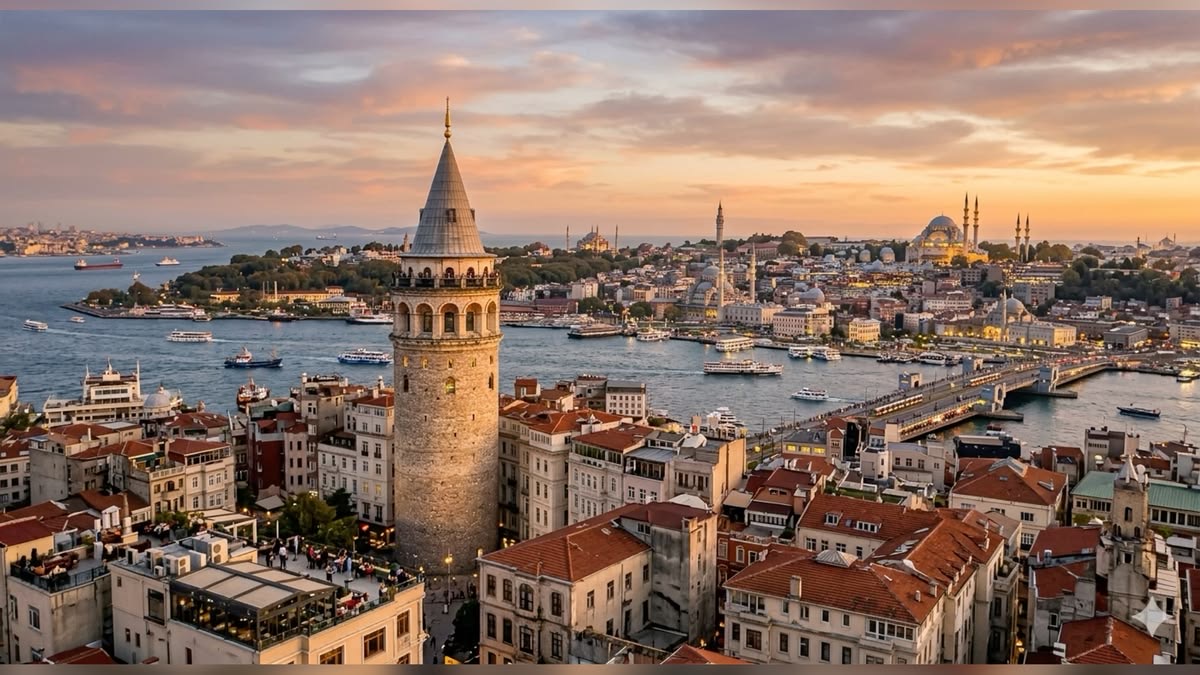
03 · Arrival Istanbul
A VIP transfer meets you at the airport and takes you to your 5-star hotel, followed by a pre-op consultation day at the Levent clinic.
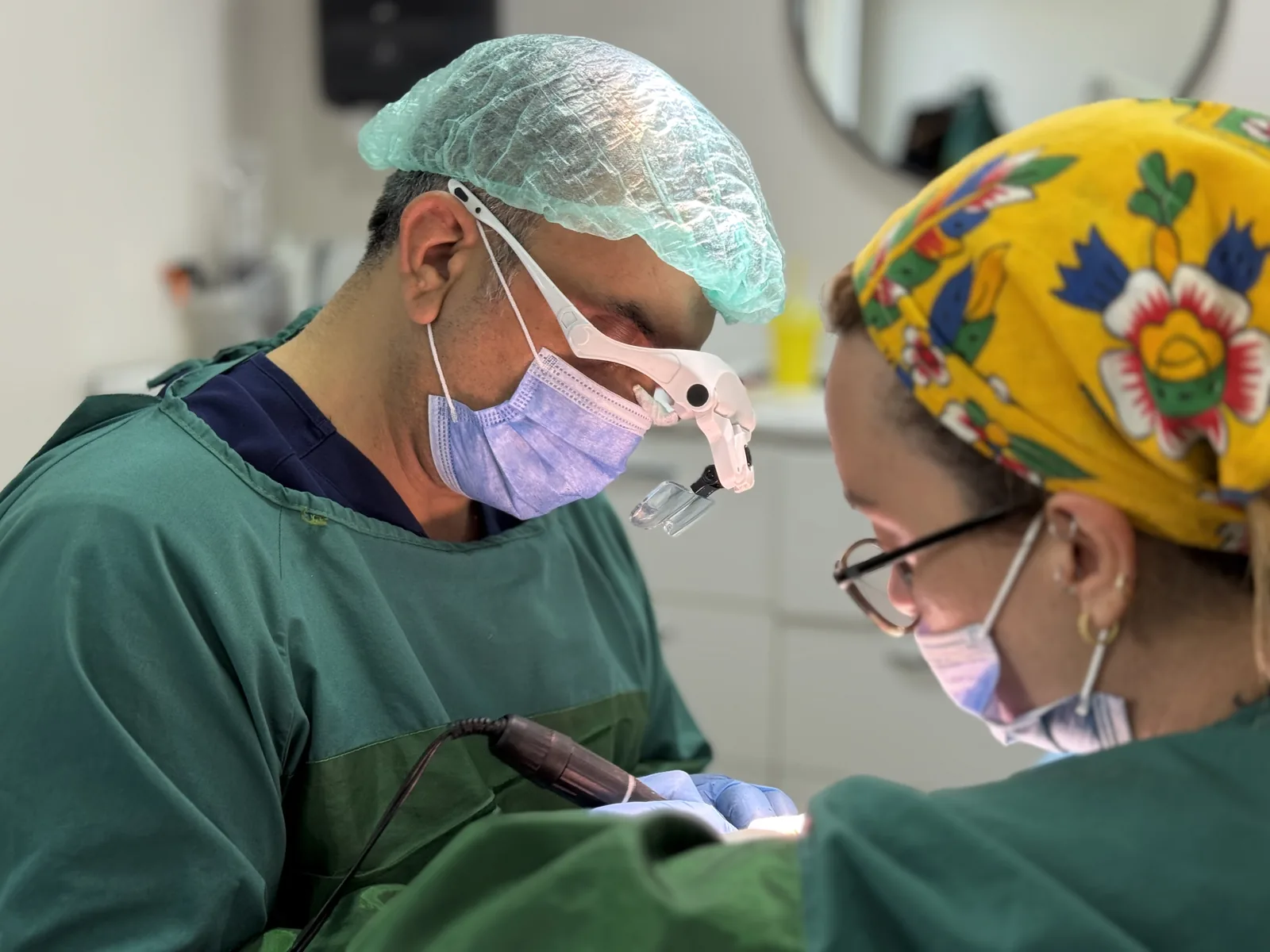
04 · Surgery Day
Dr. Arslan personally leads every package, performing the channel-opening incision himself in Gold and VIP. You are the only patient in the clinic that day.
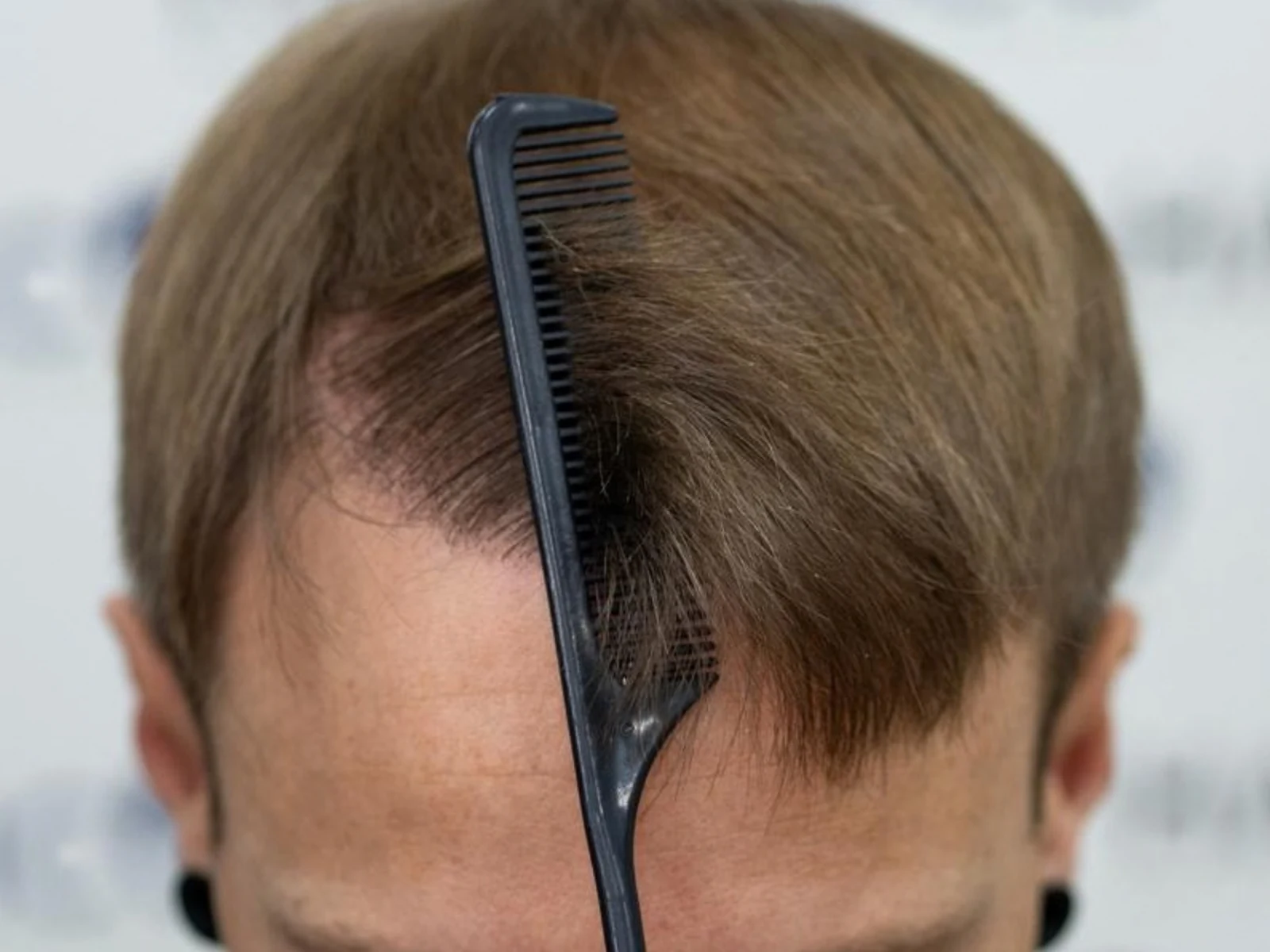
05 · Results at 12 Months
Full result visible at around 12 months. Our team supports you through 12 months of follow-up, including the first wash at the clinic.
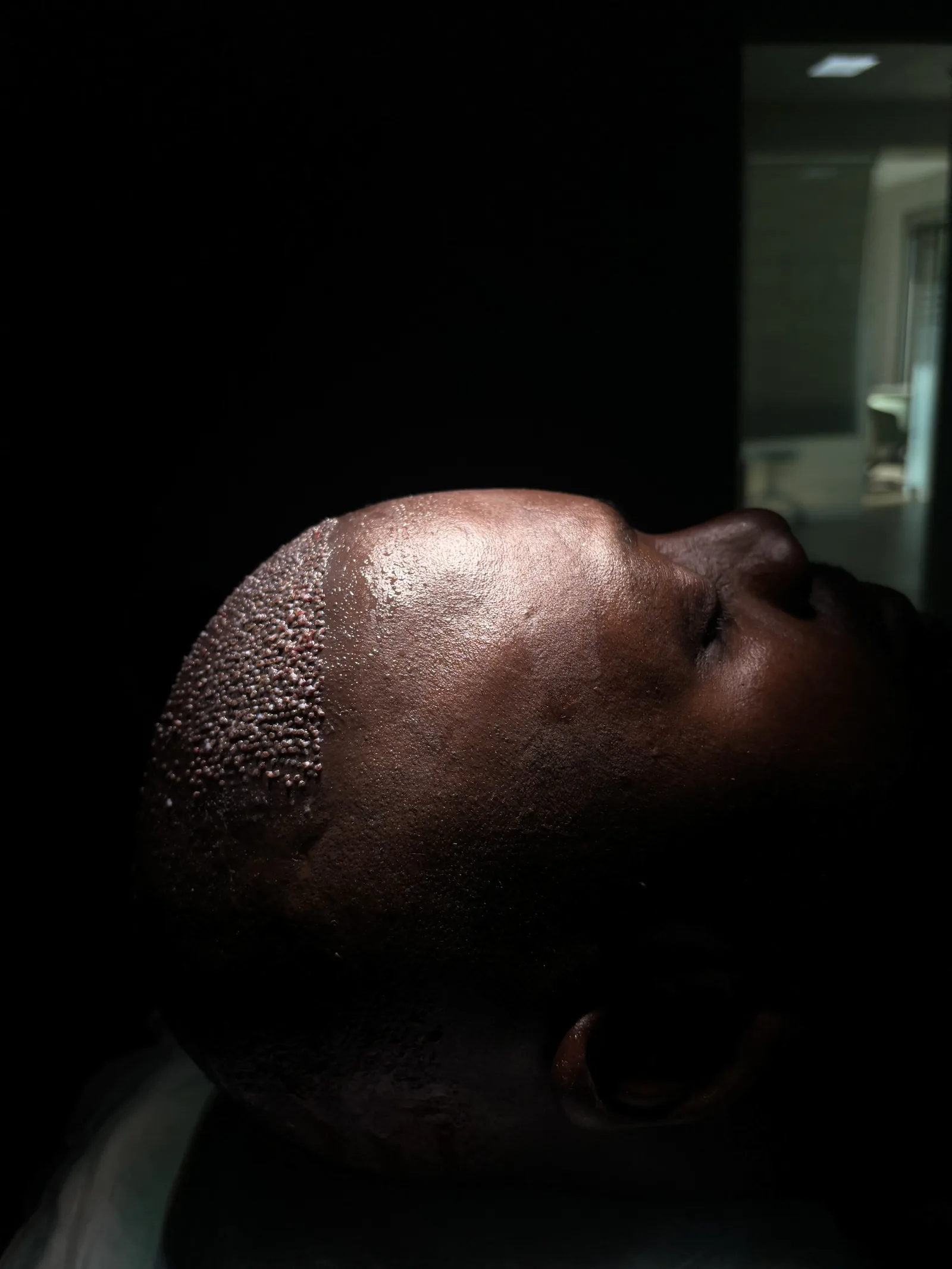
Afro-textured hair presents a specific challenge in FUE surgery: the follicle beneath the skin is curved, while the punch used for extraction is cylindrical. This means that standard extraction angles used for straight hair lead to follicle transection (cutting the follicle) — damage rates that are typically much higher in the hands of surgeons without experience in afro-textured extraction.
At Hairmedico, Dr. Arslan Musbeh employs a modified extraction technique that accounts for follicle curvature: a combination of angle adjustment, punch size selection and extraction speed adapted to each patient's specific hair characteristics. This approach significantly reduces transection rates and preserves graft integrity.



A raised-scarring tendency is more common in darker skin and is something to establish before surgery rather than discover after it. The history that matters is simple and you already know it: how previous cuts, piercings, vaccination sites or operations healed. Raised, spreading or itchy scars in your history change the plan.
Where the tendency is present, the adjustments are practical — smaller extraction punches, wider spacing across the donor area so no single zone is over-harvested, and a follow-up schedule that keeps watching the donor site after the recipient area has settled. Where there is a strong keloid history, Dr. Arslan will discuss it openly with you before agreeing to operate.
Traction alopecia — loss caused by sustained tension from braids, locs, weaves or tight ponytails — behaves differently from androgenetic loss. It is not progressive in the same way, so a hairline restored after the tension is removed is not chasing a pattern that keeps moving. That makes it, in principle, one of the more predictable cases to plan.
There is one condition attached, and it is not negotiable: the styling that caused it has to stop. Grafts placed under continuing tension face exactly the force that removed the original hair. Where the follicles have not yet scarred, removing the tension alone sometimes recovers density without surgery — which is worth establishing before booking anything.
Protective styles can usually resume once healing is complete, at a tension the scalp tolerates. The timing is set at follow-up rather than in advance, because it depends on how the grafts have settled.
Answered by Dr. Arslan Musbeh.
Afro hair follicles curve beneath the skin, requiring specialist curved punch extraction to prevent follicle damage. Dr. Arslan Musbeh has extensive experience with afro-textured hair.
Yes. The follicle retains its curl characteristics after transplantation. Properly transplanted afro hair grows with the same curl pattern as the original hair.
After researching countless clinics, I specifically didn't want a "hair mill." Dr. Arslan is hands-on throughout the entire process. I came from Australia and the experience was seamless.
Dr. Arslan was present throughout the surgery and personally performed the majority of key procedures. His professionalism and dedication made all the difference.
I already see good hair growth after only 17 weeks. The professionalism of the team and facilities was excellent.
Dr. Arslan was incredibly professional — he explained all procedures clearly. The clinic was spotless and the staff were super friendly.
From first contact, communication was prompt, transparent and efficient. My expectations were surpassed by the services and attention I received.
After 5 years of research I chose Hairmedico. Even on a basic package, Dr. Arslan performed the critical incision phase himself.