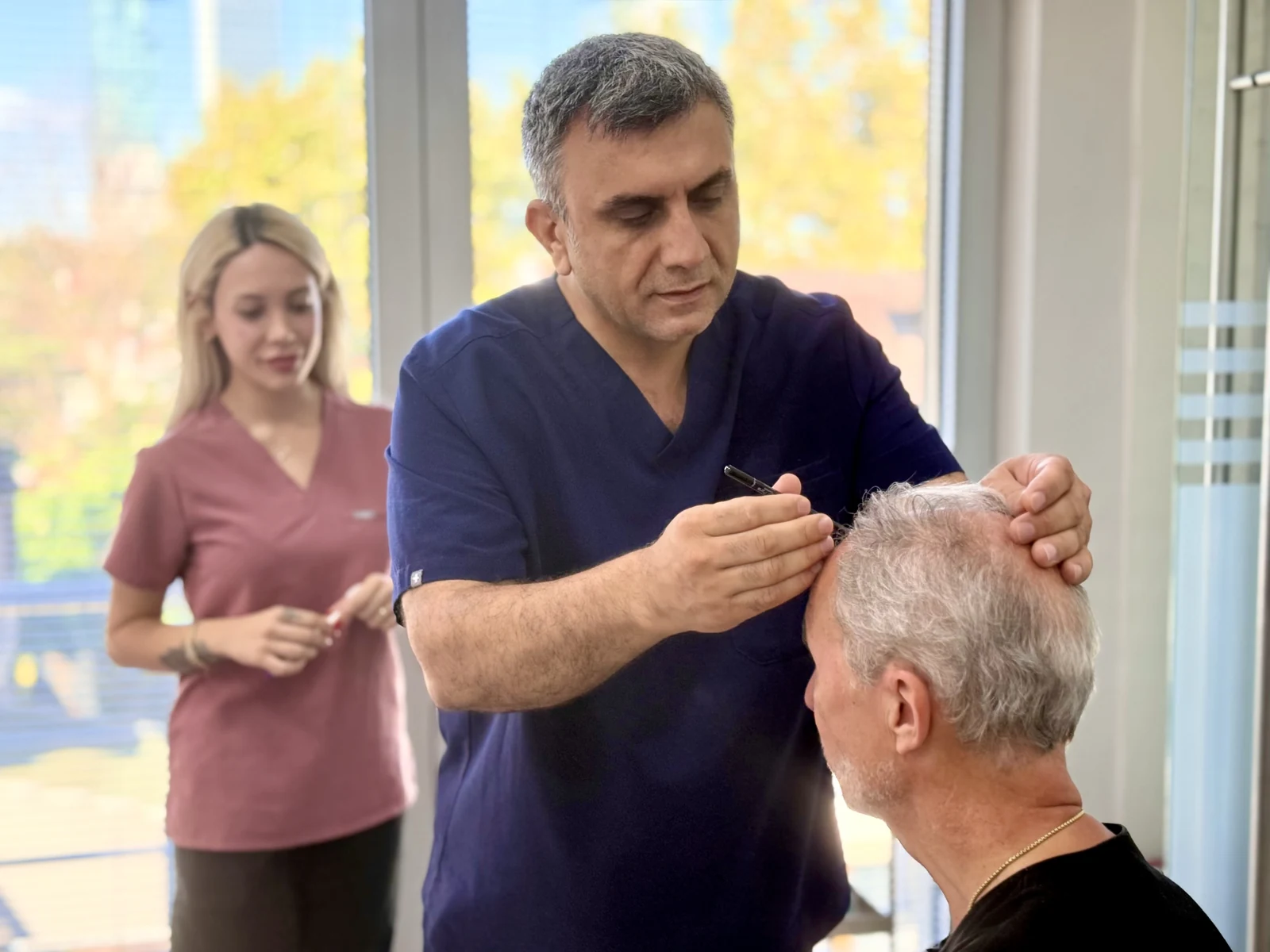
01 · Bespoke Assessment
Free photo review
Submit three photographs. Dr. Arslan reviews every case personally within 24 hours and tells you plainly whether surgery is the right next step.
Surgeon-led hair restoration clinic in Levent, Istanbul since 2005.
Explore all →Send 3–5 photographs. Personal response within 24 hours — no intermediaries.
Request Now →Selected for your specific hair loss pattern and aesthetic goals.
FUE vs DHI →FUE, DHI or Algorithmic FUE™ — Dr. Arslan recommends based on your photographs and Norwood stage.
Get Assessment → Try Graft Calculator →FUE Europe member. Ministry of Health accredited clinic. Levent, Istanbul — 60–80% less than UK or US.
View Package →FUE Europe member. Ministry of Health accredited. 17+ years. 3,000+ personal procedures. One patient per day.
Full Profile →One patient a day, every package surgeon-led. Every result personally accountable.
Read Philosophy →No hidden costs. Hotel, transfers, surgery and aftercare in one price.
View Pricing →Silver · Gold · VIP — 5-star hotel · Airport transfers · PRP included
View Pricing → Graft Calculator →Every case personally overseen by Dr. Arslan Musbeh, from consultation to results.
Full Gallery →Not every case needs a transplant. Medical treatments, therapies and specialist options.
Overview →Guides, tools and expert content — written by Dr. Arslan Musbeh.
All Articles →Eyebrow hairs grow at near-flat angles in a pattern that changes across the brow. Canal-opening on Gold and VIP, and extraction and graft placement on the VIP tier, are performed personally by Dr. Arslan Musbeh.
The Process
From your first photographs to a full result at 12 months, with Dr. Arslan Musbeh involved at every stage.
01 · Bespoke Assessment
Submit three photographs. Dr. Arslan reviews every case personally within 24 hours and tells you plainly whether surgery is the right next step.
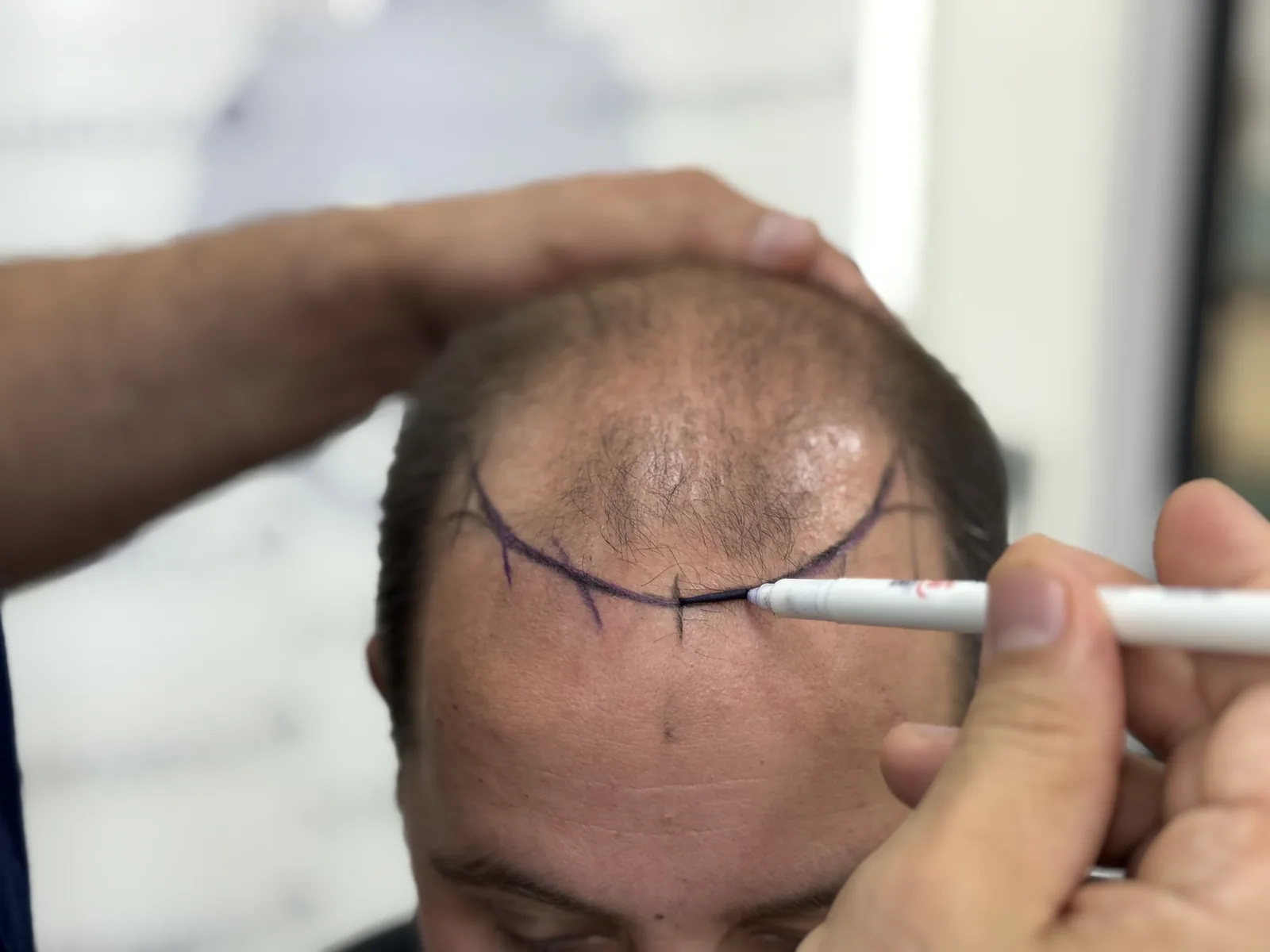
02 · Technique & Plan
FUE, DHI or Algorithmic FUE™ is confirmed by the surgeon directly, with a graft estimate and a fixed, all-inclusive price.
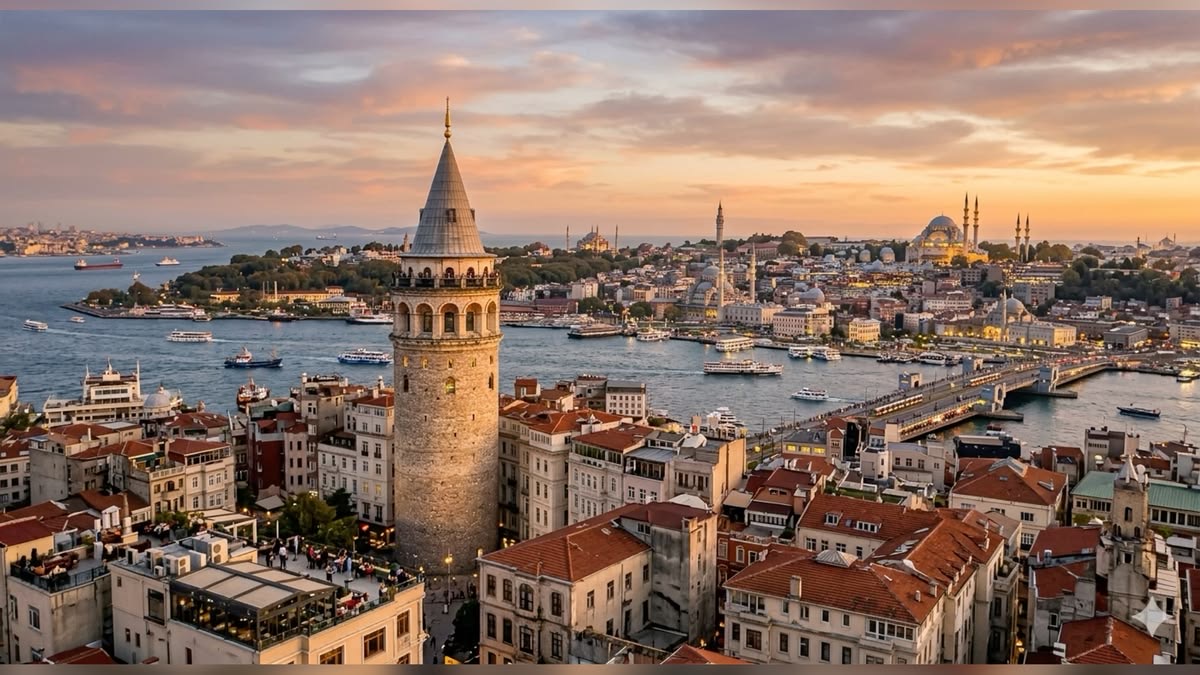
03 · Arrival Istanbul
A VIP transfer meets you at the airport and takes you to your 5-star hotel, followed by a pre-op consultation day at the Levent clinic.
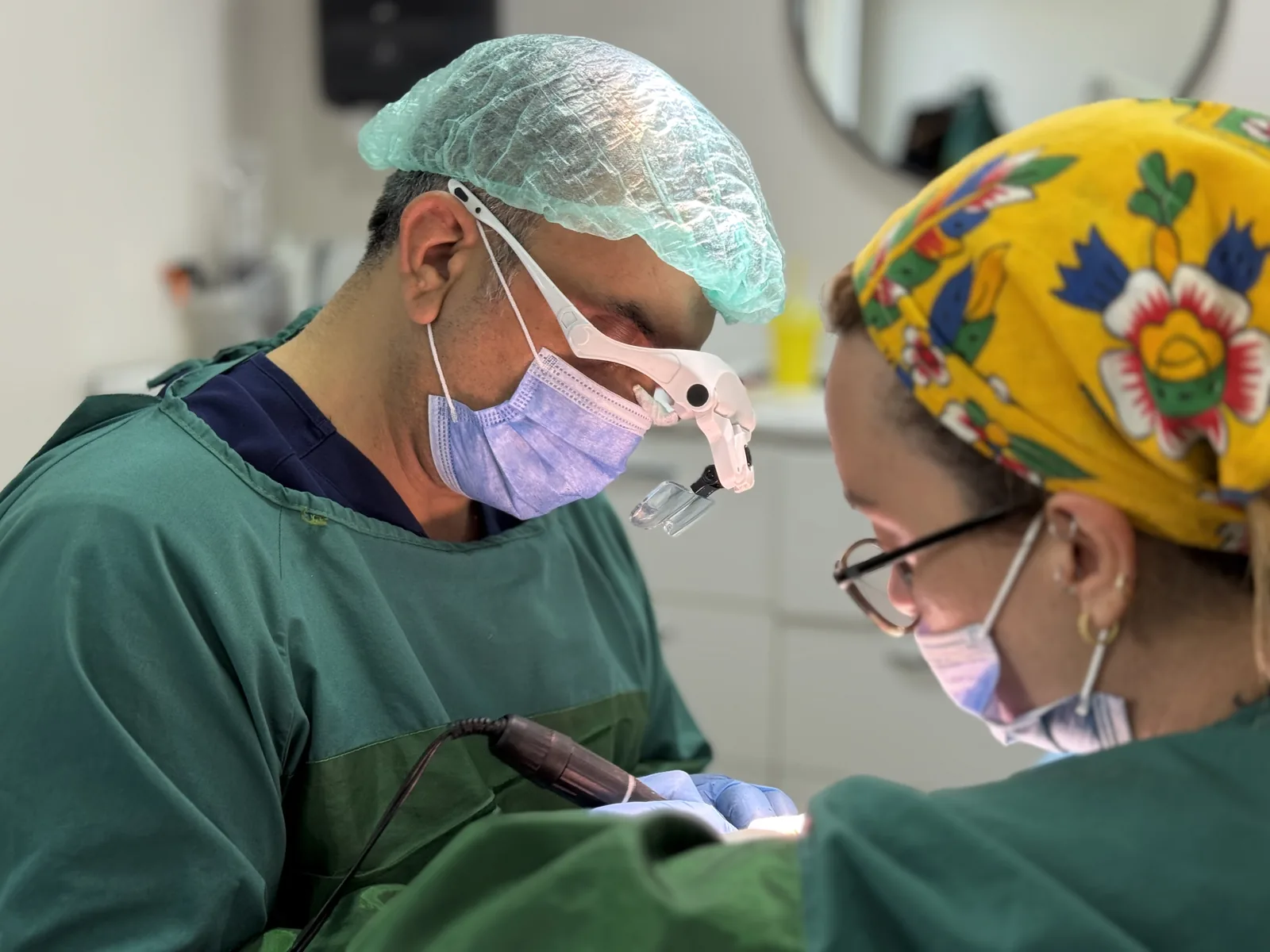
04 · Surgery Day
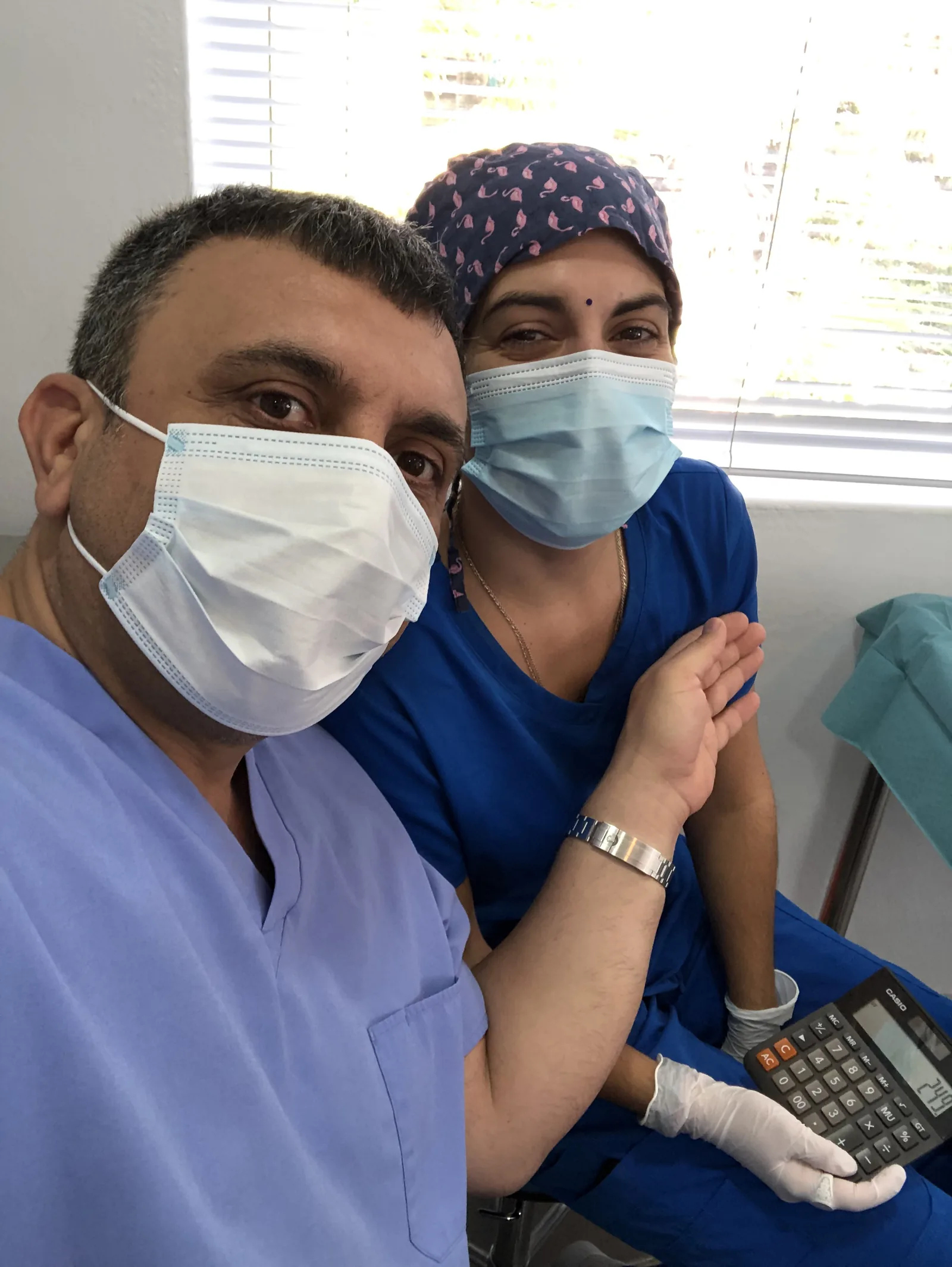
Dr. Arslan personally leads every package, performing the channel-opening incision himself in Gold and VIP. You are the only patient in the clinic that day.
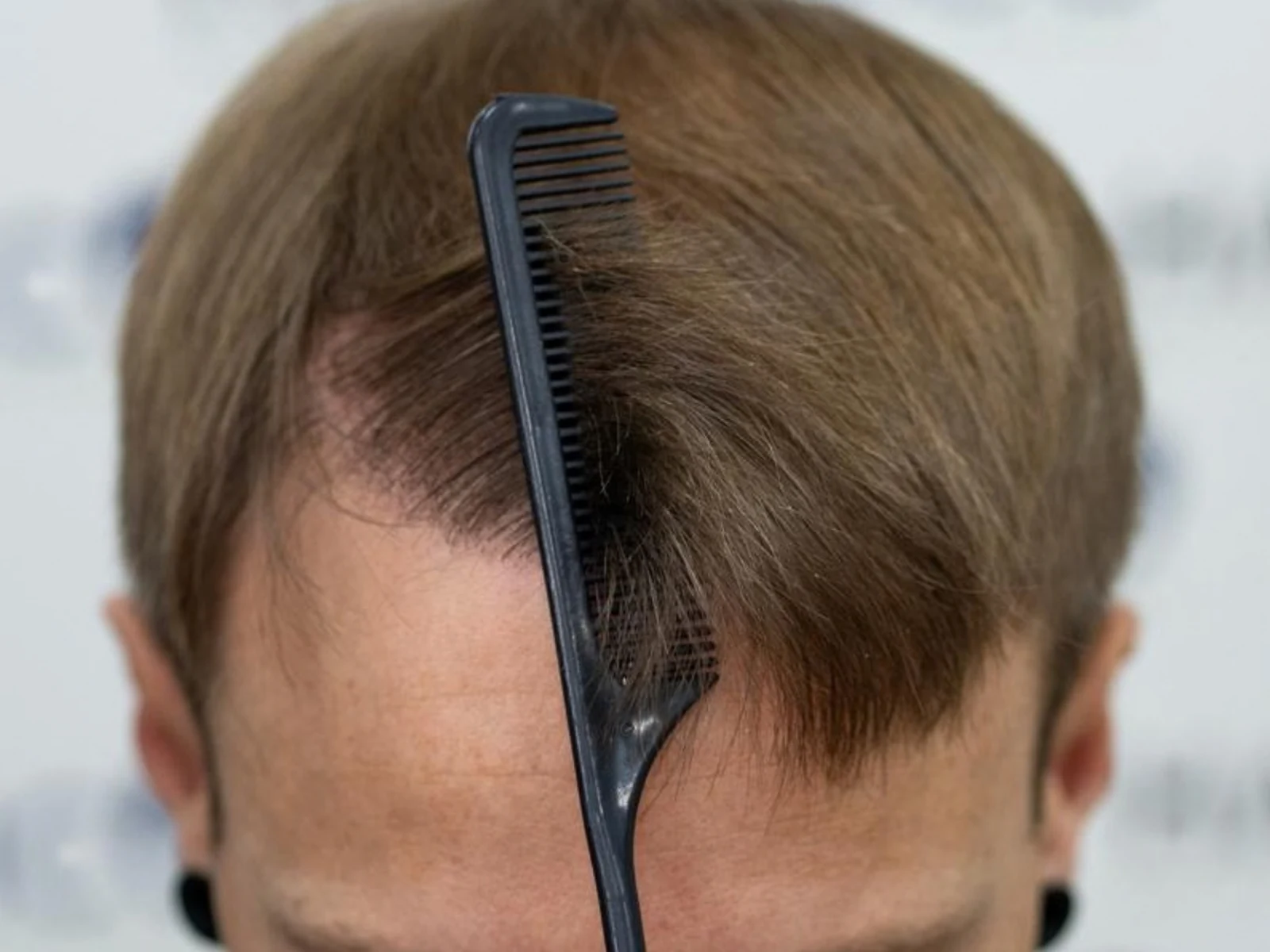
05 · Results at 12 Months
Full result visible at around 12 months. Our team supports you through 12 months of follow-up, including the first wash at the clinic.
The eyebrow is one of the most expressive features of the face. An eyebrow transplant that looks natural requires extraordinary precision in implantation angle — eyebrow hairs grow at near-flat angles (10–15° from the skin surface) and in a defined directional pattern that changes across the brow. Each zone has a different growth direction that must be replicated to achieve a natural result.
At Hairmedico, Dr. Arslan Musbeh performs the canal-opening personally in the Gold and VIP tiers, and the extraction and every graft placement too in the VIP tier. The eyebrow shape is designed in advance with the patient — reflecting their facial anatomy, existing brow remnants and their aesthetic goal — before a single graft is placed.



The single decision that determines whether a brow looks grown or drawn is made before surgery, with a pencil. Shape, thickness, arch position and where the tail ends are agreed with you and marked on the skin — then checked in a mirror, sitting upright, because a brow drawn on a reclined patient does not sit where it looked like it would.
Two points are worth deciding deliberately rather than by default. Brows are naturally sisters rather than twins: forcing perfect symmetry reads as artificial, and a small natural difference is usually left in place. And density is easier to add later than to take away — a conservative first session that can be built on beats one that has to be reduced.
Eyebrow recovery follows the same biology as scalp work, but it happens on the most visible part of the face, which makes the middle of it harder to sit through. Knowing the shape of it in advance is most of the answer.
Aftercare in the first ten days is mostly about not touching: no rubbing, no makeup over the brow area, no sleeping face-down, and no plucking or shaping until growth is established.
Answered by Dr. Arslan Musbeh.
Over-plucking, alopecia areata, scarring, thyroid conditions, or naturally sparse brows are common causes. Dr. Arslan Musbeh assesses each case individually.
Yes, when performed by a specialist. Dr. Arslan Musbeh uses FUE with precise angular placement to match natural eyebrow direction, creating a result indistinguishable from natural brows.
After researching countless clinics, I specifically didn't want a "hair mill." Dr. Arslan is hands-on throughout the entire process. I came from Australia and the experience was seamless.
Dr. Arslan was present throughout the surgery and personally performed the majority of key procedures. His professionalism and dedication made all the difference.
I already see good hair growth after only 17 weeks. The professionalism of the team and facilities was excellent.
Dr. Arslan was incredibly professional — he explained all procedures clearly. The clinic was spotless and the staff were super friendly.
From first contact, communication was prompt, transparent and efficient. My expectations were surpassed by the services and attention I received.
After 5 years of research I chose Hairmedico. Even on a basic package, Dr. Arslan performed the critical incision phase himself.