Hair Loss in Women —
Causes, Stages & Solutions.
Female hair loss is more complex than male pattern baldness. It is rarely just genetics — hormones, thyroid, iron and stress all play a role. Understanding the real cause changes everything about treatment.
Women's Hair Loss Is Not
The Same as Men's
The most important thing to understand about female hair loss: it is rarely a single cause. At Hairmedico, Dr. Arslan requires a blood panel for every female patient before any treatment — because treating the wrong cause leads to failed results.
- Primarily DHT-driven, single cause in 95% of cases
- Receding hairline + crown thinning (Norwood pattern)
- Progressive and predictable
- Frontal hairline recedes visibly
- Blood panel optional
- Transplant usually straightforward to plan
- Multiple causes: DHT, hormones, thyroid, iron, stress
- Diffuse thinning across crown (Ludwig pattern)
- Can fluctuate — not always progressive
- Frontal hairline typically preserved
- Blood panel mandatory at Hairmedico
- Medical causes must be excluded first
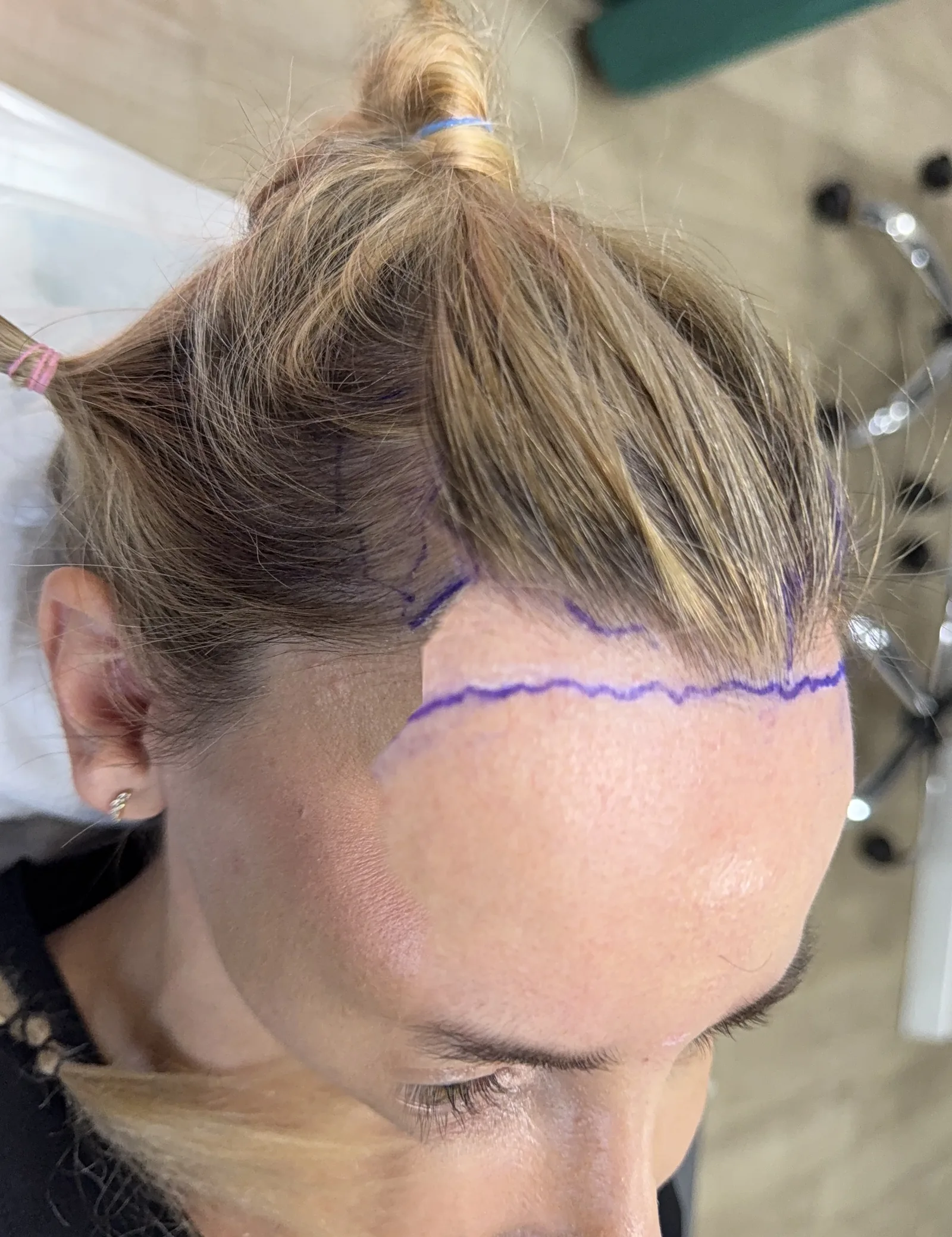
Why Women Lose Their Hair —
The 6 Main Causes
When Hormonal Triggers
Cause Hair Loss in Women
Female hair loss often coincides with hormonal transitions. Knowing which transition triggered your hair loss helps Dr. Arslan determine whether medical treatment first, or transplant, is the right approach.
"A hair transplant on an undiagnosed thyroid condition or iron deficiency will fail. We check everything before we operate. This is not optional." — Dr. Arslan Musbeh
How Female Hair Loss
Can Be Treated
Treatment depends entirely on the cause. Medical causes must be treated first. Androgenetic alopecia that is stable and unresponsive to medical treatment is the primary indication for hair transplant in women.
- No shaving required — completely discreet procedure
- Grafts placed directly with Choi pen — maximum precision
- Targets central parting & crown diffuse thinning
- Blood panel + stability assessment required first
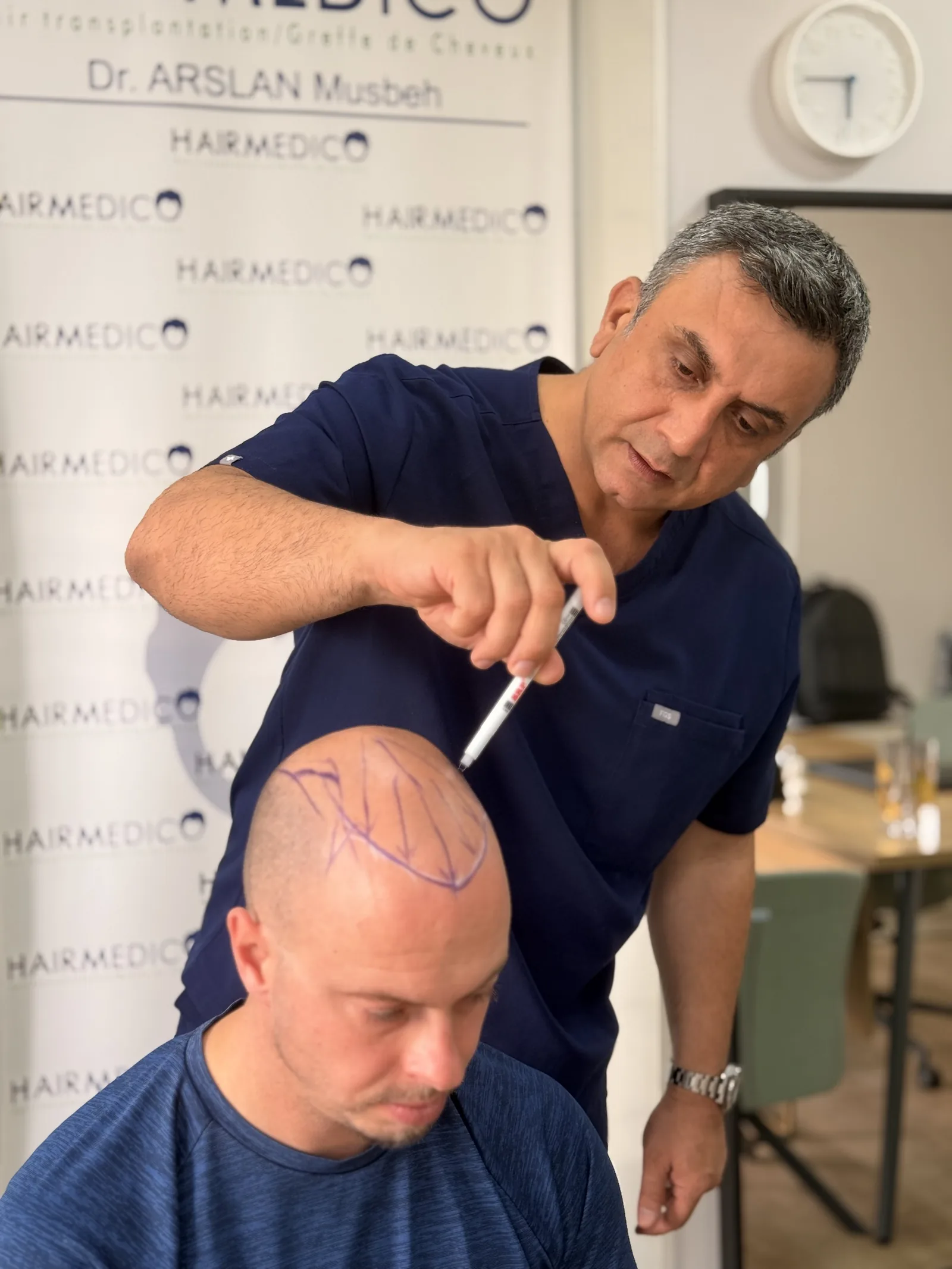
- Personal implantation by Dr. Arslan in the VIP tier
- Platelet-rich plasma stimulates dormant follicles
- Best results for early-stage diffuse thinning
- Often combined with Minoxidil for better outcomes
- Used post-transplant to support graft survival
- 3–6 sessions, then annual maintenance
- Only FDA-approved topical treatment for women
- 5% solution or foam applied daily to scalp
- Extends anagen phase — slows and can reverse early loss
- Results in 4–6 months, must continue indefinitely
- Safe for women — no hormonal side effects
- Thyroid treatment → hair regrows in 6–12 months
- Iron supplementation → visible improvement in 3–6 months
- Hormonal therapy (HRT) in menopausal women
- Anti-androgens (spironolactone) for PCOS-related loss
- Treating the cause is always Step 1 at Hairmedico
Women's Hair Transplant
Before & After
All results performed by Dr. Arslan Musbeh using unshaven DHI. Every female patient completes a blood panel before surgery.

Women's Hair Loss
Common Questions
Every woman's hair loss is different. Send photos to Dr. Arslan's team and we will identify the most likely cause and the right next step — free, within 24 hours.
Ask Dr. Arslan's TeamLearn More About
Women's Hair Restoration
Hair Loss? Start Here.
Send photos of your hair via WhatsApp. Dr. Arslan's team will identify the most likely cause, recommend whether medical treatment or a transplant is right for you, and advise on next steps — within 24 hours, free.