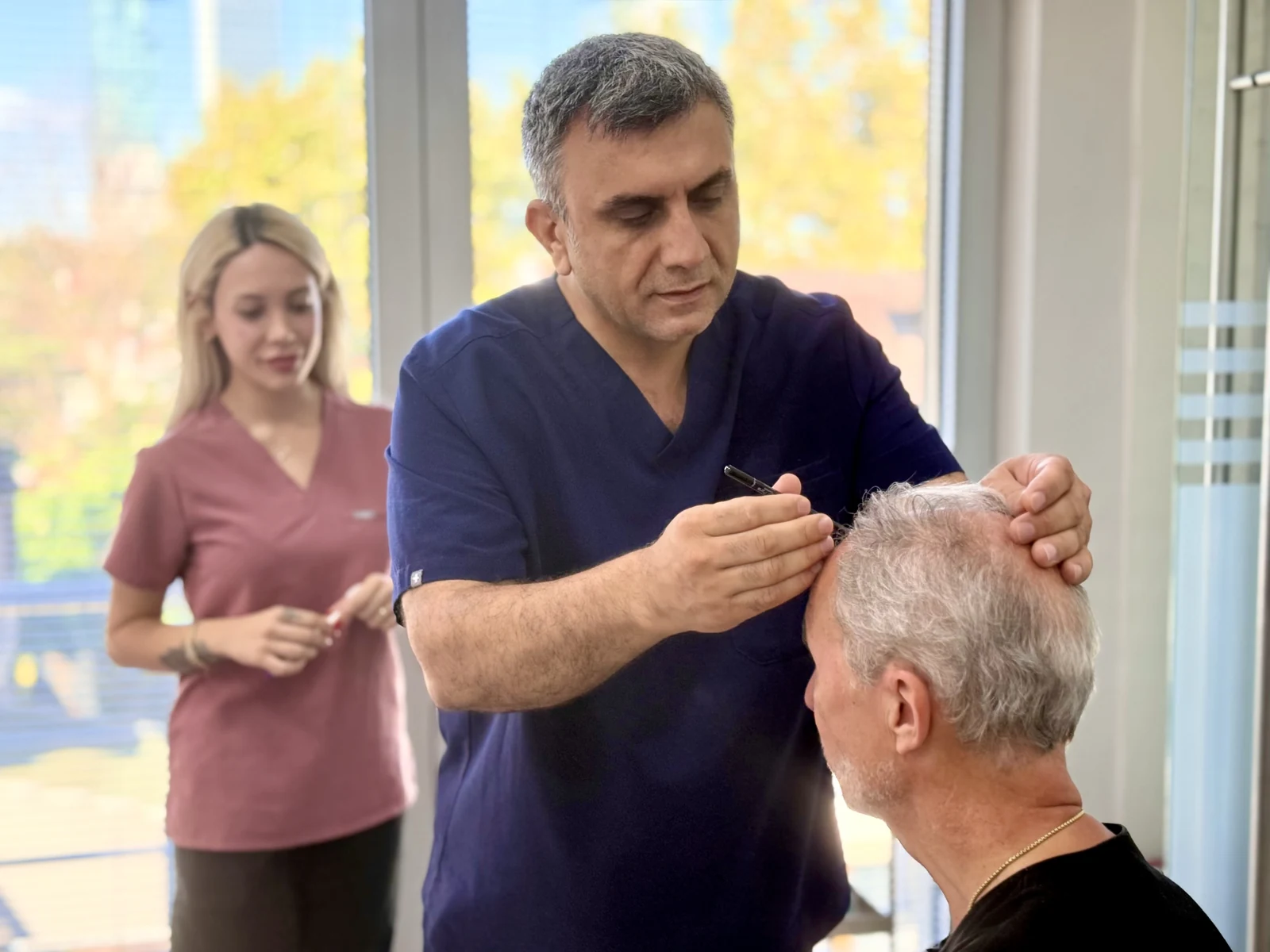
01 · Bespoke Assessment
Free photo review
Submit three photographs. Dr. Arslan reviews every case personally within 24 hours and tells you plainly whether surgery is the right next step.
Surgeon-led hair restoration clinic in Levent, Istanbul since 2005.
Explore all →Send 3–5 photographs. Personal response within 24 hours — no intermediaries.
Request Now →Selected for your specific hair loss pattern and aesthetic goals.
FUE vs DHI →FUE, DHI or Algorithmic FUE™ — Dr. Arslan recommends based on your photographs and Norwood stage.
Get Assessment → Try Graft Calculator →FUE Europe member. Ministry of Health accredited clinic. Levent, Istanbul — 60–80% less than UK or US.
View Package →FUE Europe member. Ministry of Health accredited. 17+ years. 3,000+ personal procedures. One patient per day.
Full Profile →One patient a day, every package surgeon-led. Every result personally accountable.
Read Philosophy →No hidden costs. Hotel, transfers, surgery and aftercare in one price.
View Pricing →Silver · Gold · VIP — 5-star hotel · Airport transfers · PRP included
View Pricing → Graft Calculator →Every case personally overseen by Dr. Arslan Musbeh, from consultation to results.
Full Gallery →Not every case needs a transplant. Medical treatments, therapies and specialist options.
Overview →Guides, tools and expert content — written by Dr. Arslan Musbeh.
All Articles →Dr. Arslan spends significant time designing your personal hairline before surgery — using natural irregular patterns, correct angles and appropriate density for your face shape and age.
The Process
From your first photographs to a full result at 12 months, with Dr. Arslan Musbeh involved at every stage.
01 · Bespoke Assessment
Submit three photographs. Dr. Arslan reviews every case personally within 24 hours and tells you plainly whether surgery is the right next step.
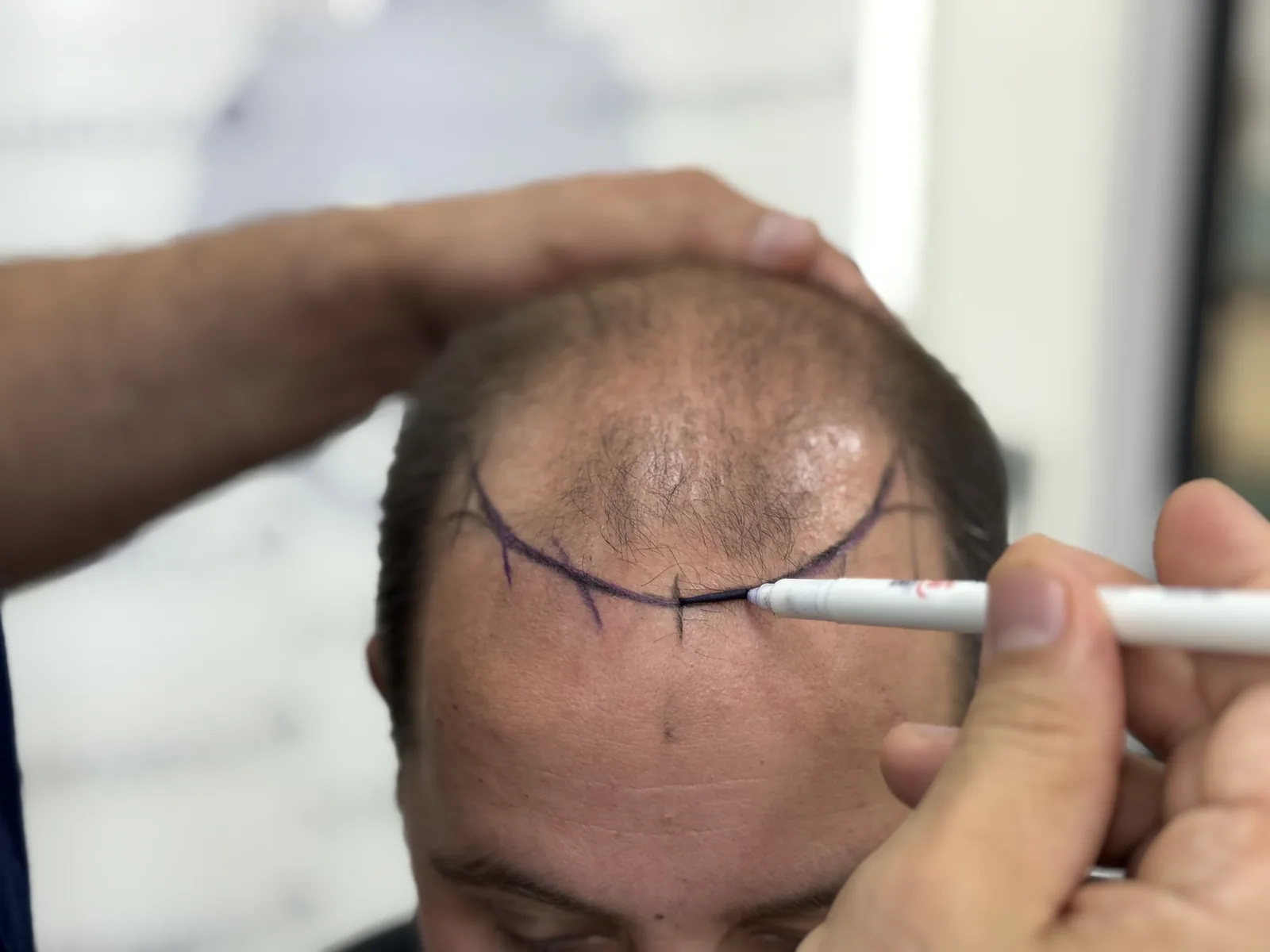
02 · Technique & Plan
FUE, DHI or Algorithmic FUE™ is confirmed by the surgeon directly, with a graft estimate and a fixed, all-inclusive price.

03 · Arrival Istanbul
A VIP transfer meets you at the airport and takes you to your 5-star hotel, followed by a pre-op consultation day at the Levent clinic.
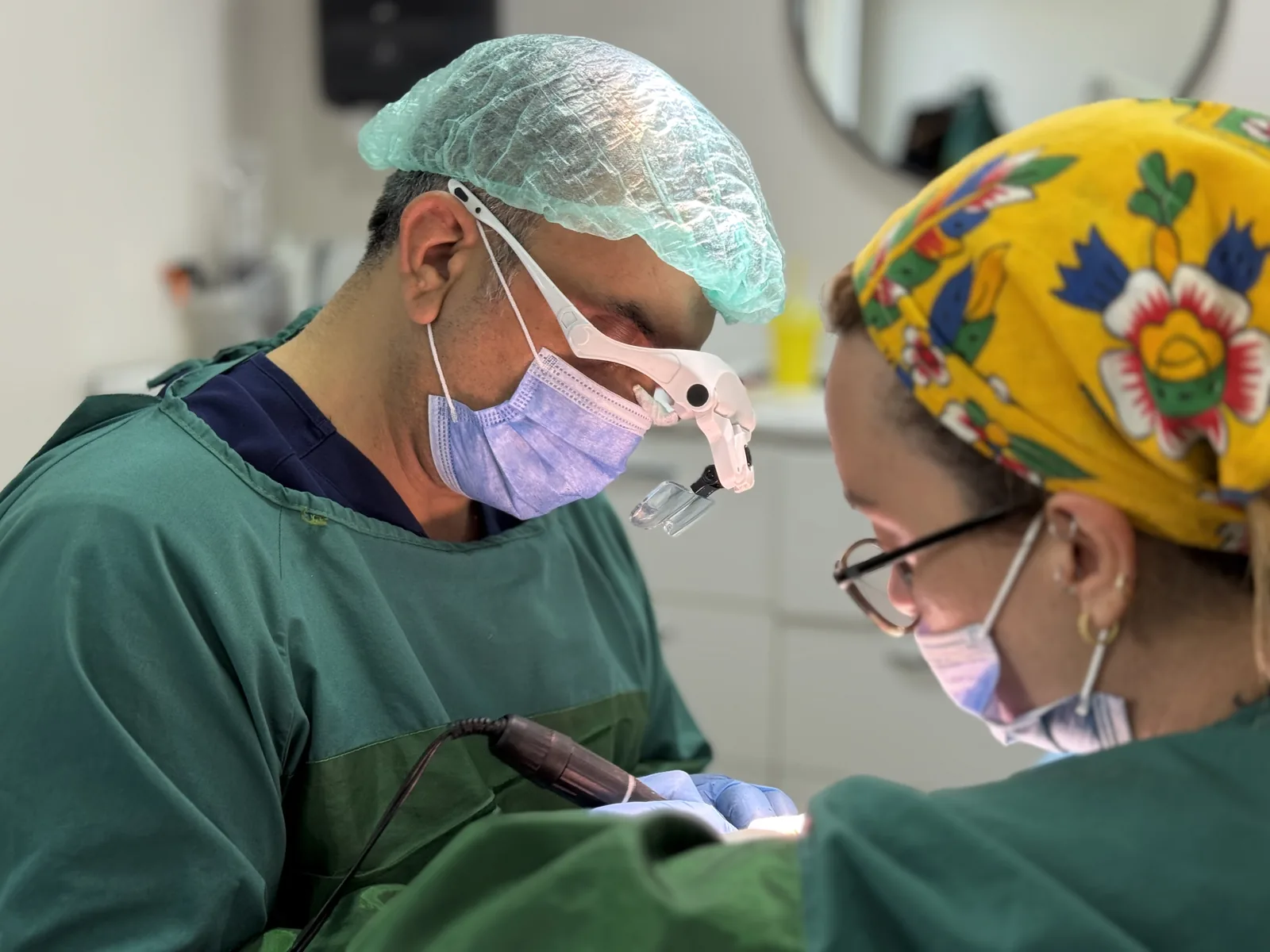
04 · Surgery Day
Dr. Arslan personally leads every package, performing the channel-opening incision himself in Gold and VIP. You are the only patient in the clinic that day.
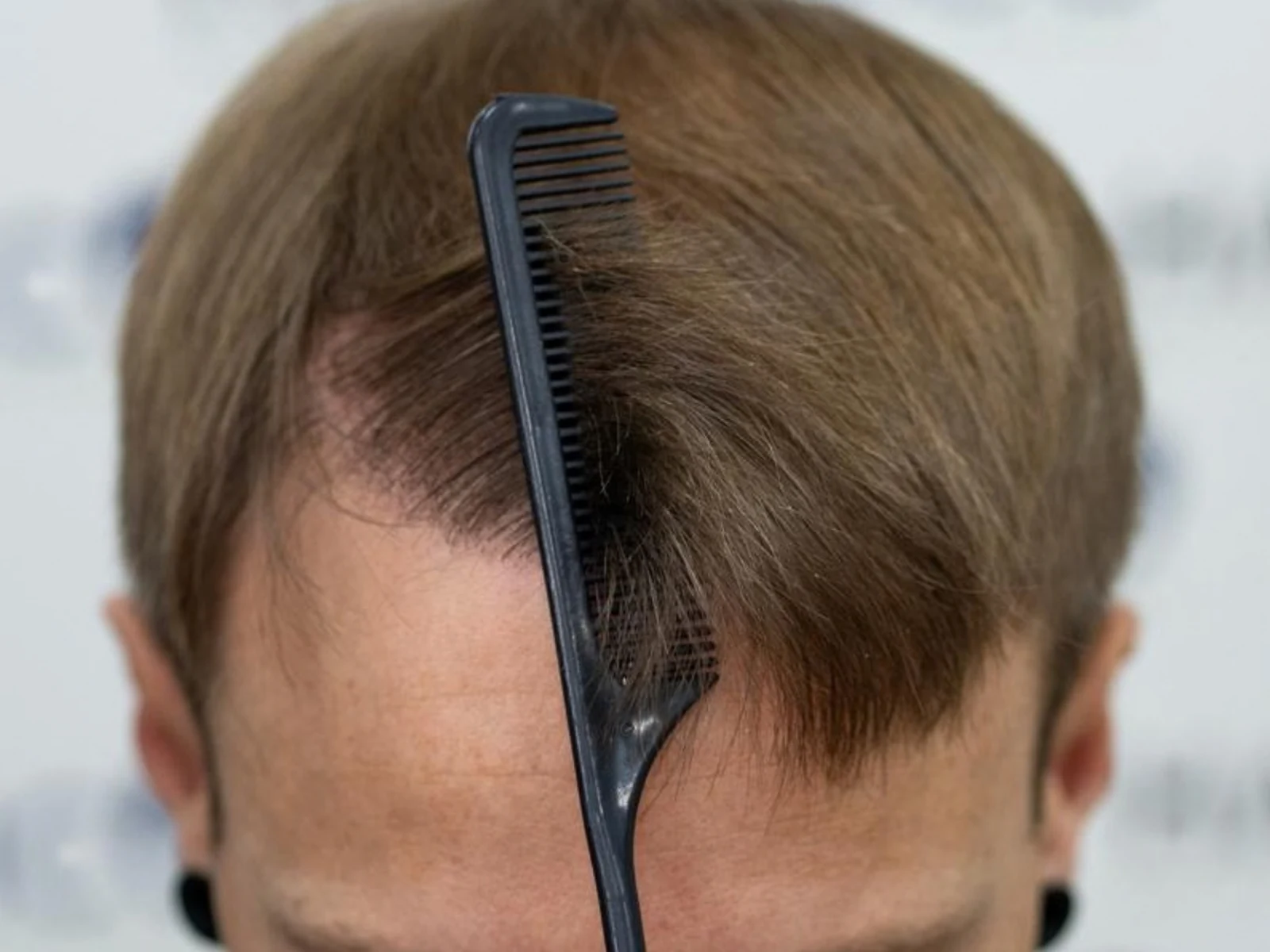
05 · Results at 12 Months
Full result visible at around 12 months. Our team supports you through 12 months of follow-up, including the first wash at the clinic.


The most common regret in hair restoration is a hairline placed too low. It looks correct in the year it is done. It looks wrong once the hair behind it thins, because a mature face carries a higher, softer line than a twenty-year-old face does.
A hairline has three components a surgeon designs separately: the central point, the temporal recessions on each side, and the transition zone where density builds from single hairs to full coverage. Getting the shape right matters more than graft count — a well-designed line at moderate density reads as natural, while a dense line in the wrong position never does.
The transition zone is where the work shows. Single-hair grafts at the leading edge, then two-hair grafts behind, produces an edge that softens the way a natural hairline does. A line built entirely from multi-hair grafts looks abrupt in any light.
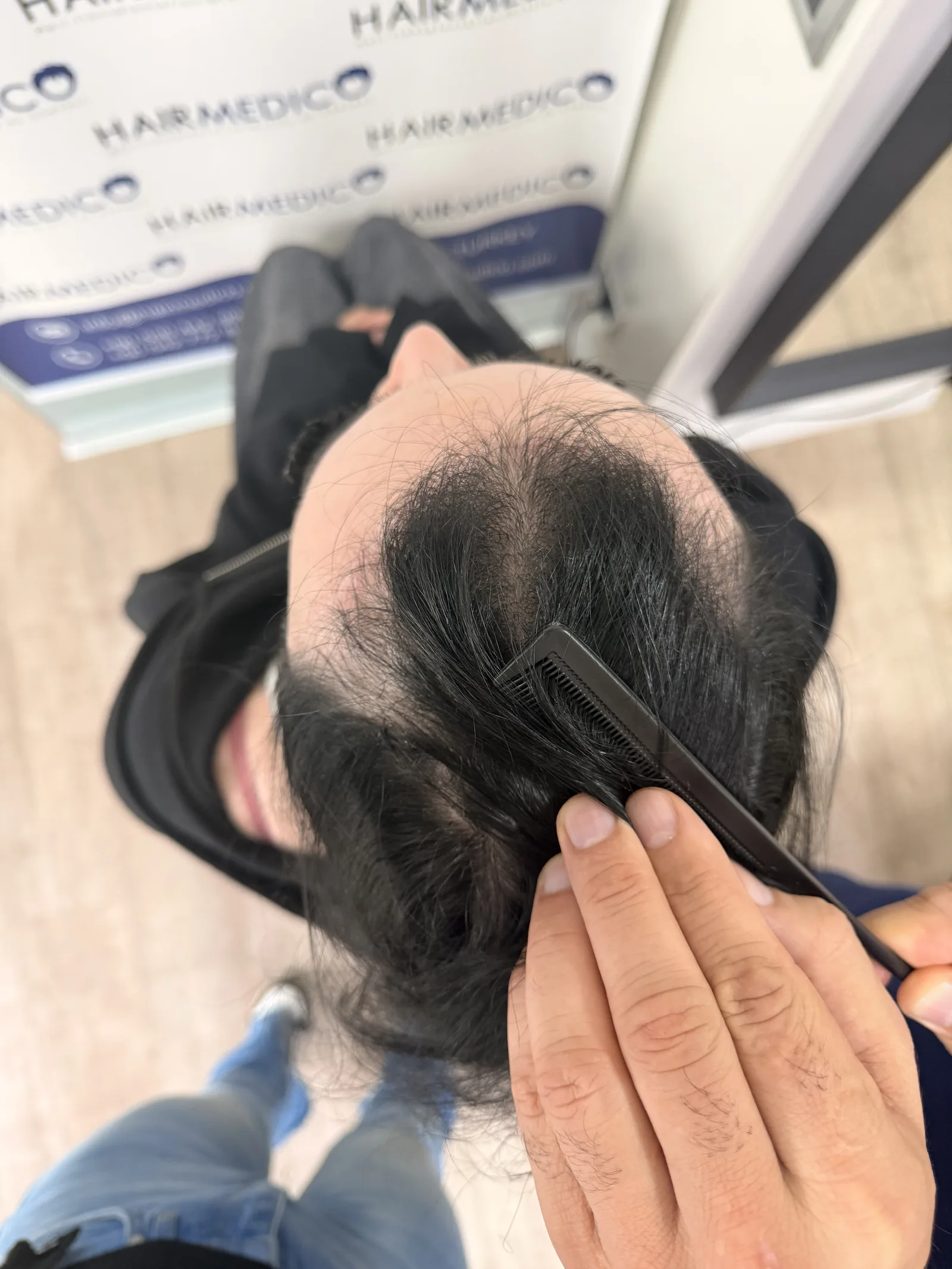
| Assessed | Why it changes the design |
|---|---|
| Facial proportions | The line is positioned against forehead height and brow, not a fixed measurement. |
| Norwood stage | Establishes what loss is still to come behind the proposed line. |
| Rate of progression | Fast progression argues for a higher, more conservative position. |
| Donor density | Determines whether the design can be supported now and refined later. |
| Hair calibre and curl | Decides how many grafts the transition zone needs to look soft. |
| Age | A line drawn at twenty-two has to still work at fifty. |
Identify your stage on the Norwood scale, or send photographs for an assessment of what your donor area can support.
The hairline is where implantation angle matters most, because every graft is visible and the eye reads inconsistency immediately. DHI places each graft directly with an implanter, giving control over angle, depth and direction at the moment of placement, which is why it is frequently selected for the frontal zone.
That does not make DHI the right answer for every case — the choice follows the plan, not the reverse. FUE and DHI compared sets out where each is appropriate.
The best candidates have hair loss that has stabilised or is progressing slowly, donor density strong enough to support both the hairline and whatever recedes behind it later, and hair calibre coarse enough to read as dense at the frontal edge. A defined recession pattern — Norwood II to IV, with the mid-scalp and crown still intact — is the most predictable case, because the design only has to answer for one zone rather than loss that has not happened yet.
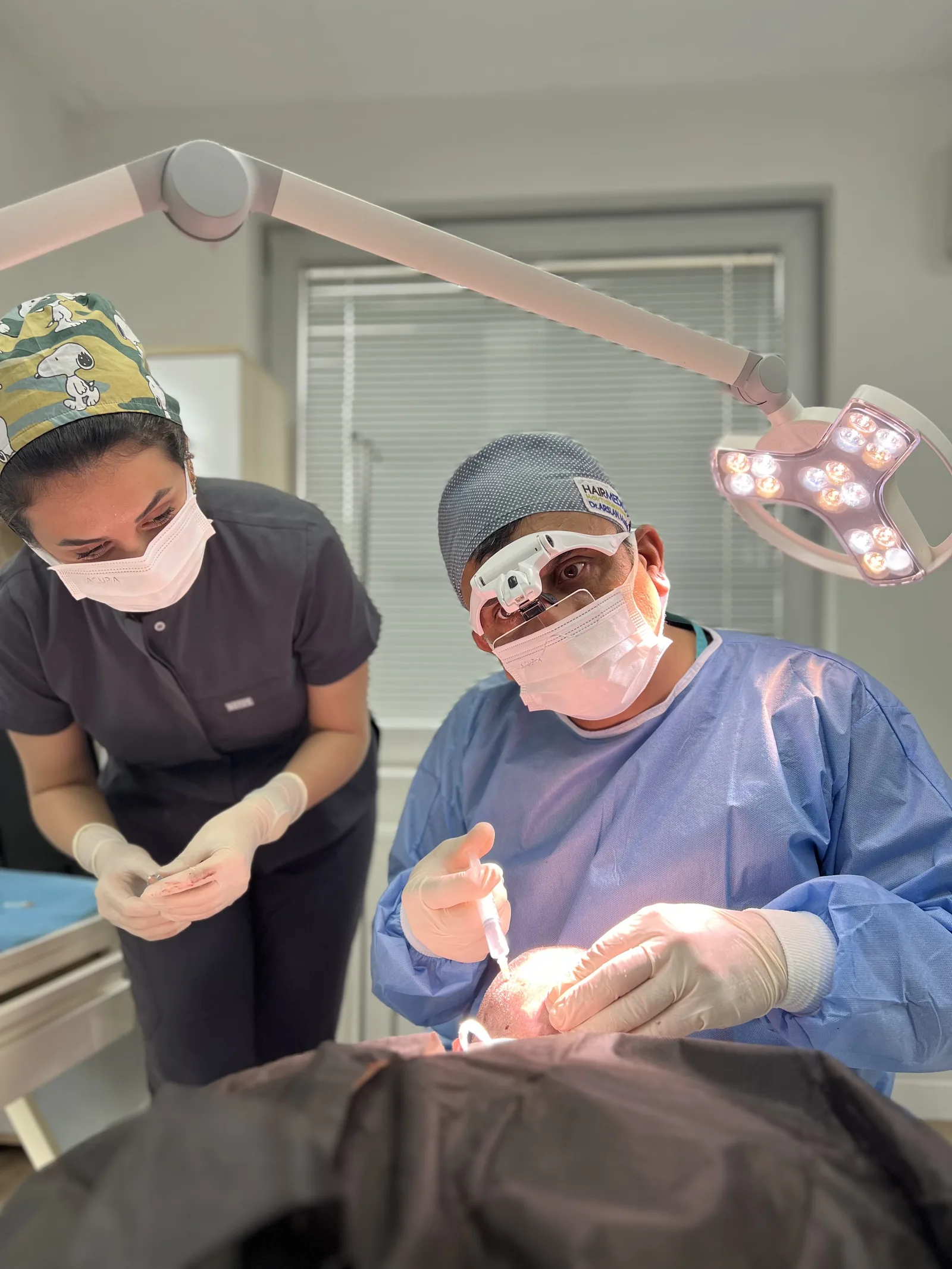
Patients in their early twenties whose hair loss is still actively progressing are the group Dr. Arslan is most likely to advise waiting on, or to design conservatively rather than aggressively. A line placed too far forward on a pattern that has not finished revealing itself is the scenario most likely to need correction later — one reason the design always accounts for the face at sixty, not the face this year. Check your stage on the Norwood scale, or read the age and candidacy guide for how this is assessed.
Diffuse thinning with no defined recession pattern, or a donor area already used by a previous procedure elsewhere, changes the calculation — these cases are reviewed individually against photographs rather than the general guidance above.
Use the graft calculator to estimate costs, or send photos to Dr. Arslan for a free personalised assessment.
Ask Dr. ArslanSend photos of your hair via WhatsApp. Dr. Arslan will assess your hair loss, recommend the right treatment and provide your personalised all-inclusive quote within 24 hours.