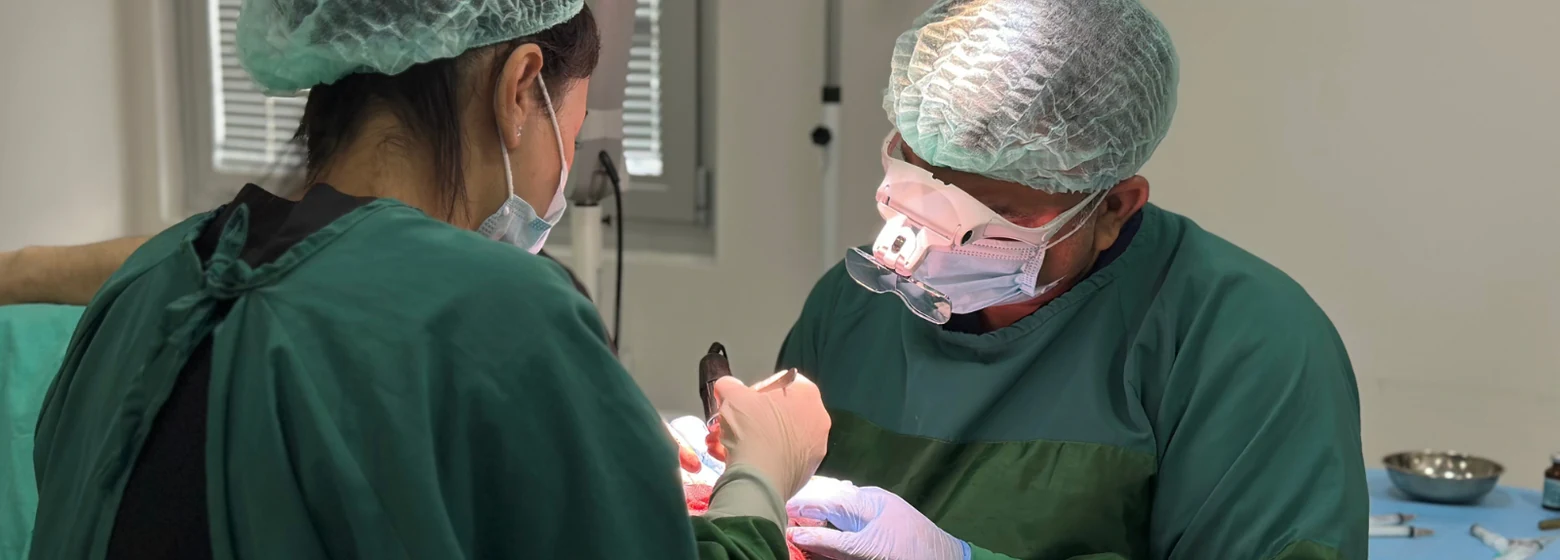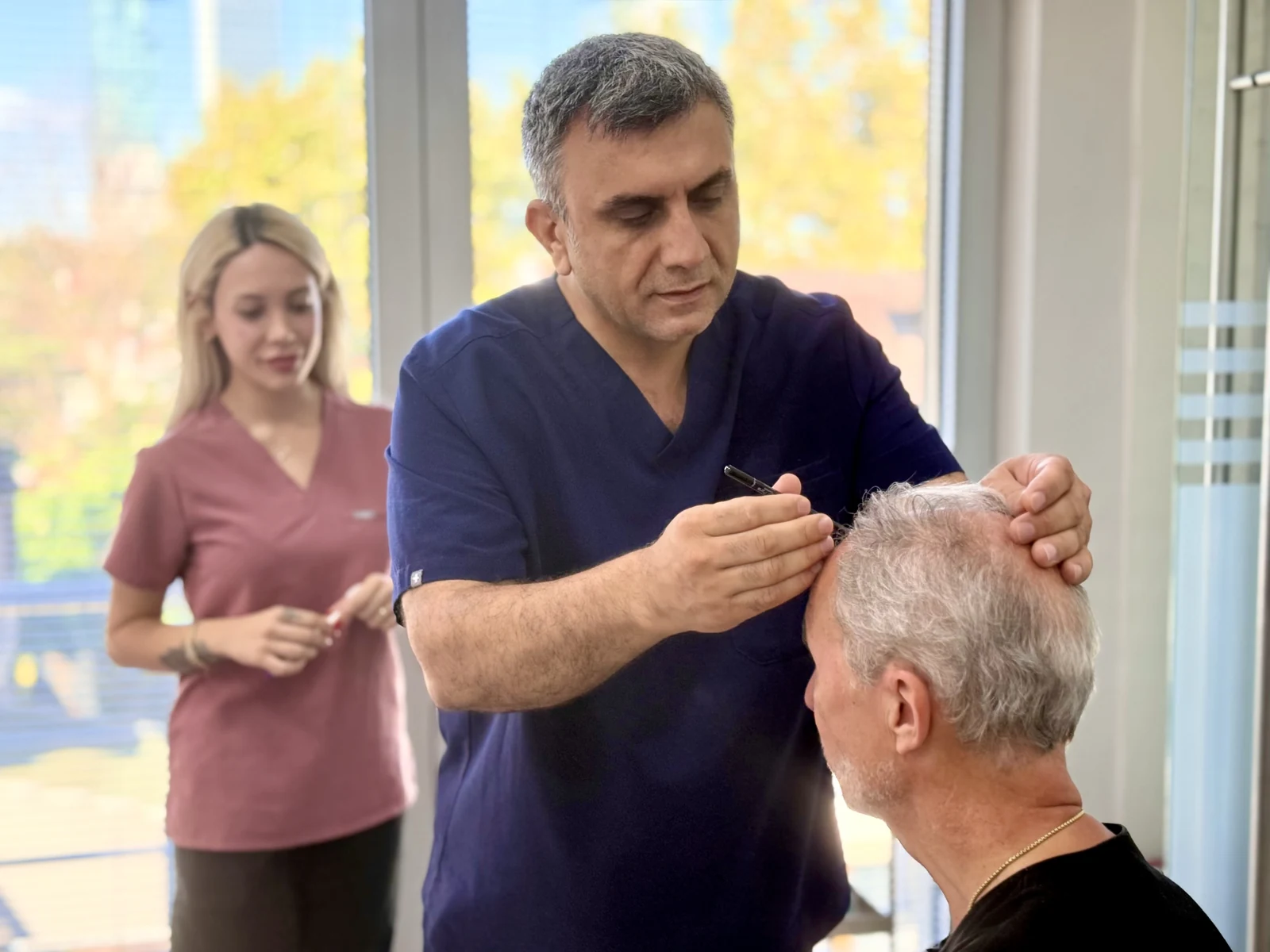
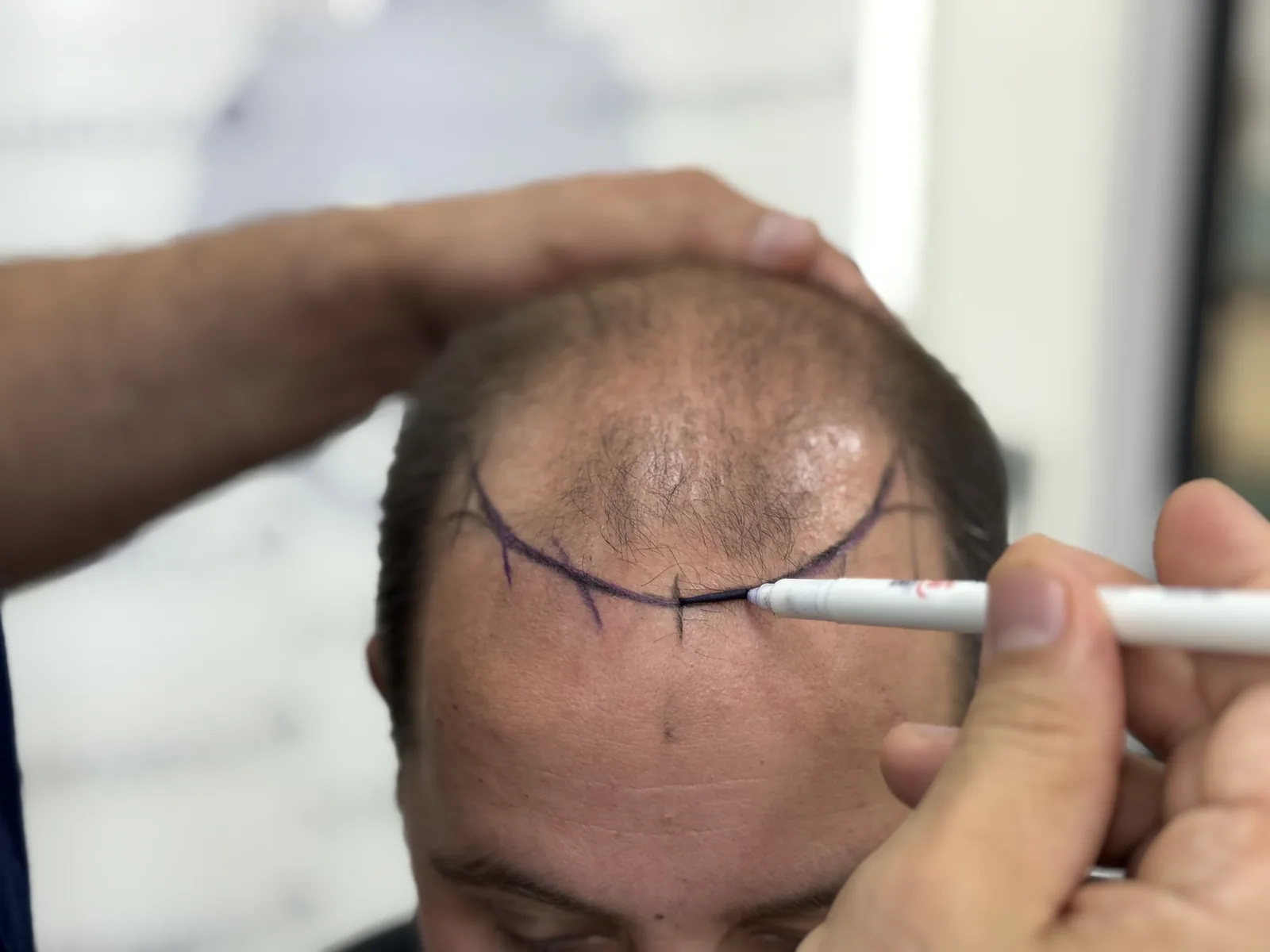

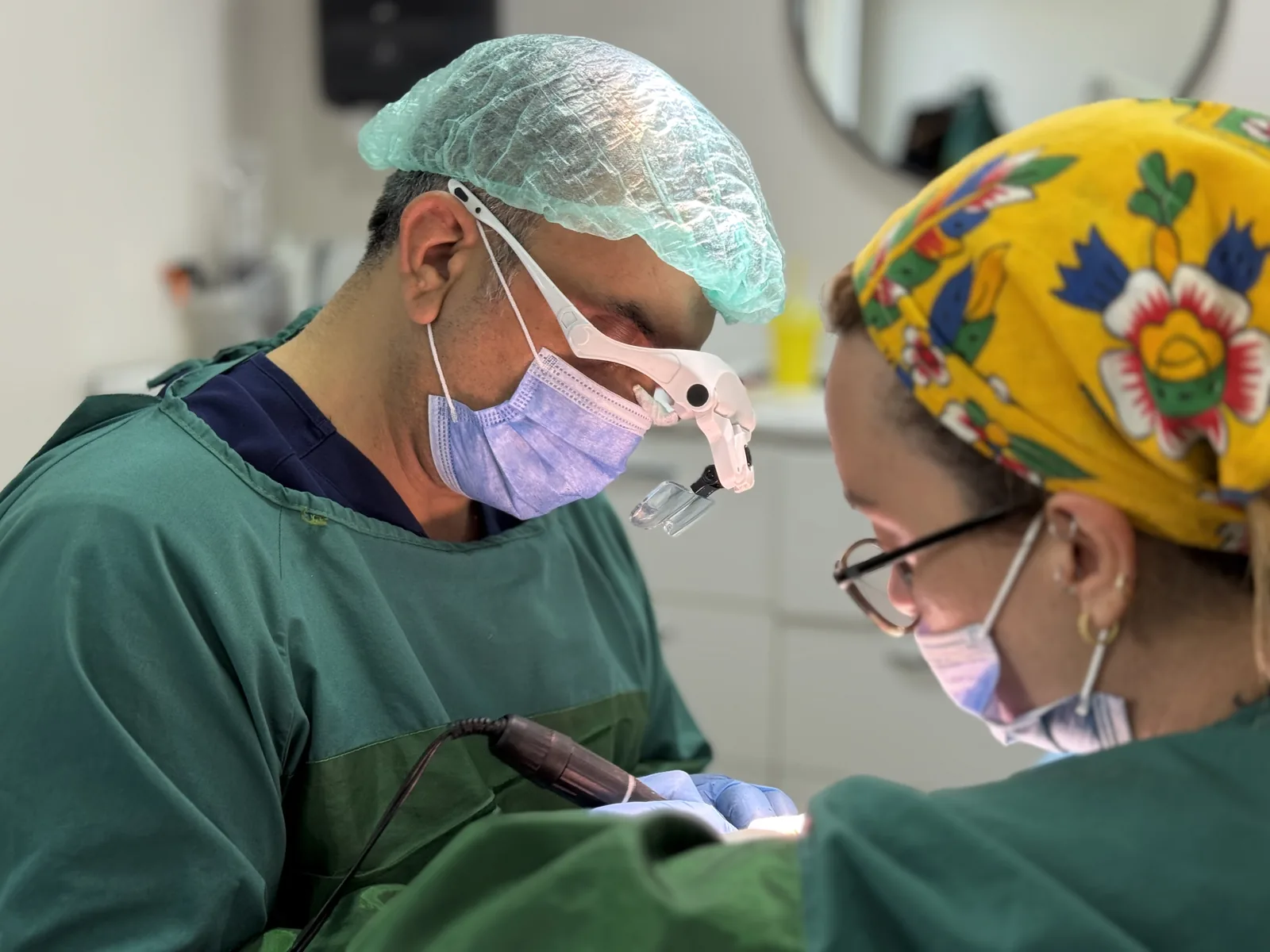
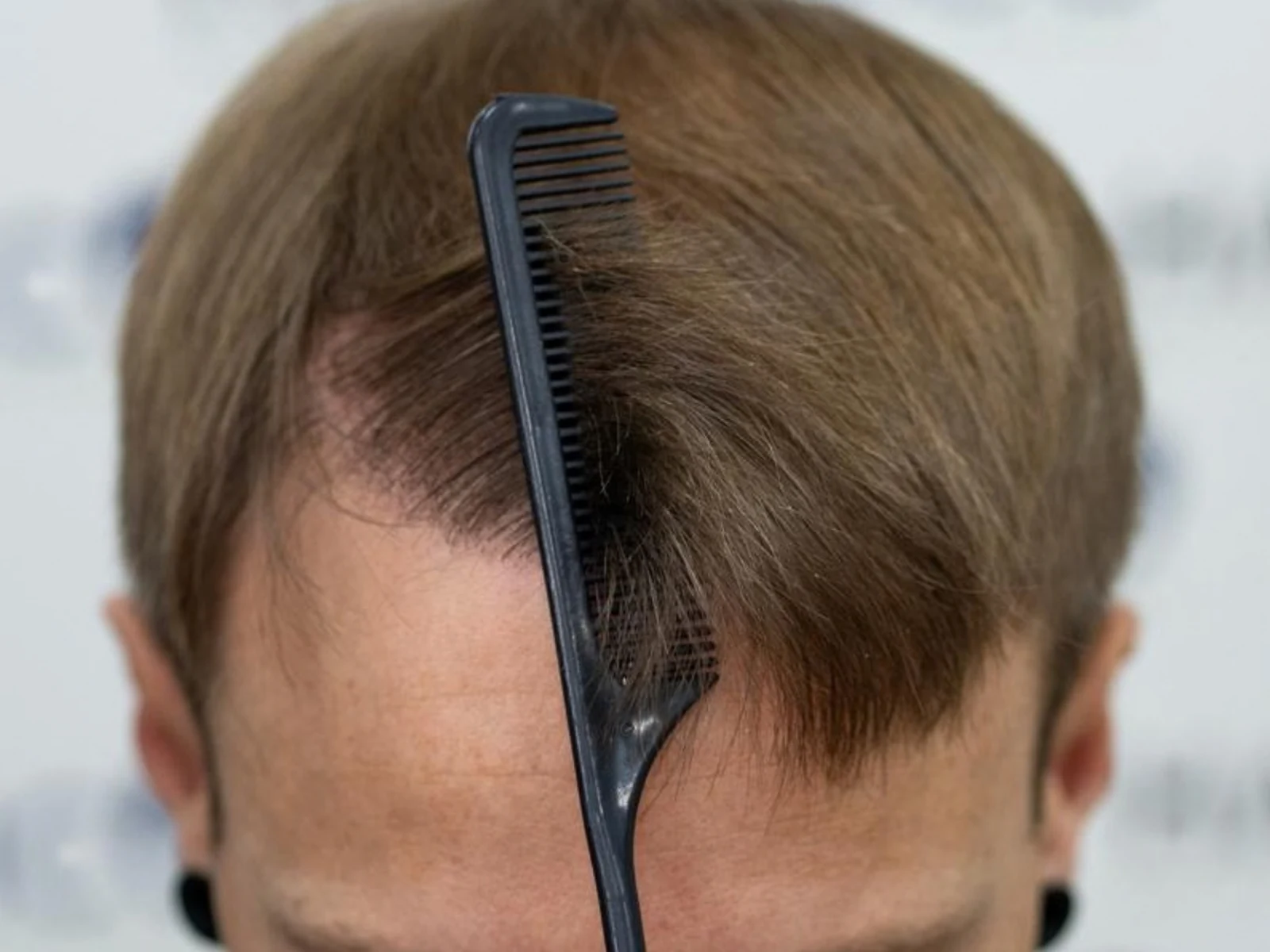
What is Sapphire FUE?
Sapphire FUE is a refinement of standard FUE hair transplant that replaces the steel incision blade with a sapphire gemstone-tipped blade for creating recipient channels. The extraction phase is identical to classic FUE — the difference is in how the implantation sites are prepared.
Sapphire, as a material, is significantly harder than surgical steel (Mohs hardness 9 vs 6–7) and has a naturally smoother surface. This allows the blade to create finer, V-shaped channels with cleaner edges and less lateral tissue compression — reducing trauma to the surrounding scalp with each incision.
At Hairmedico, Dr. Arslan Musbeh uses sapphire blades as standard for most FUE procedures — particularly in the hairline and temporal zones where the quality of each channel directly determines the naturalness and density of the final result.
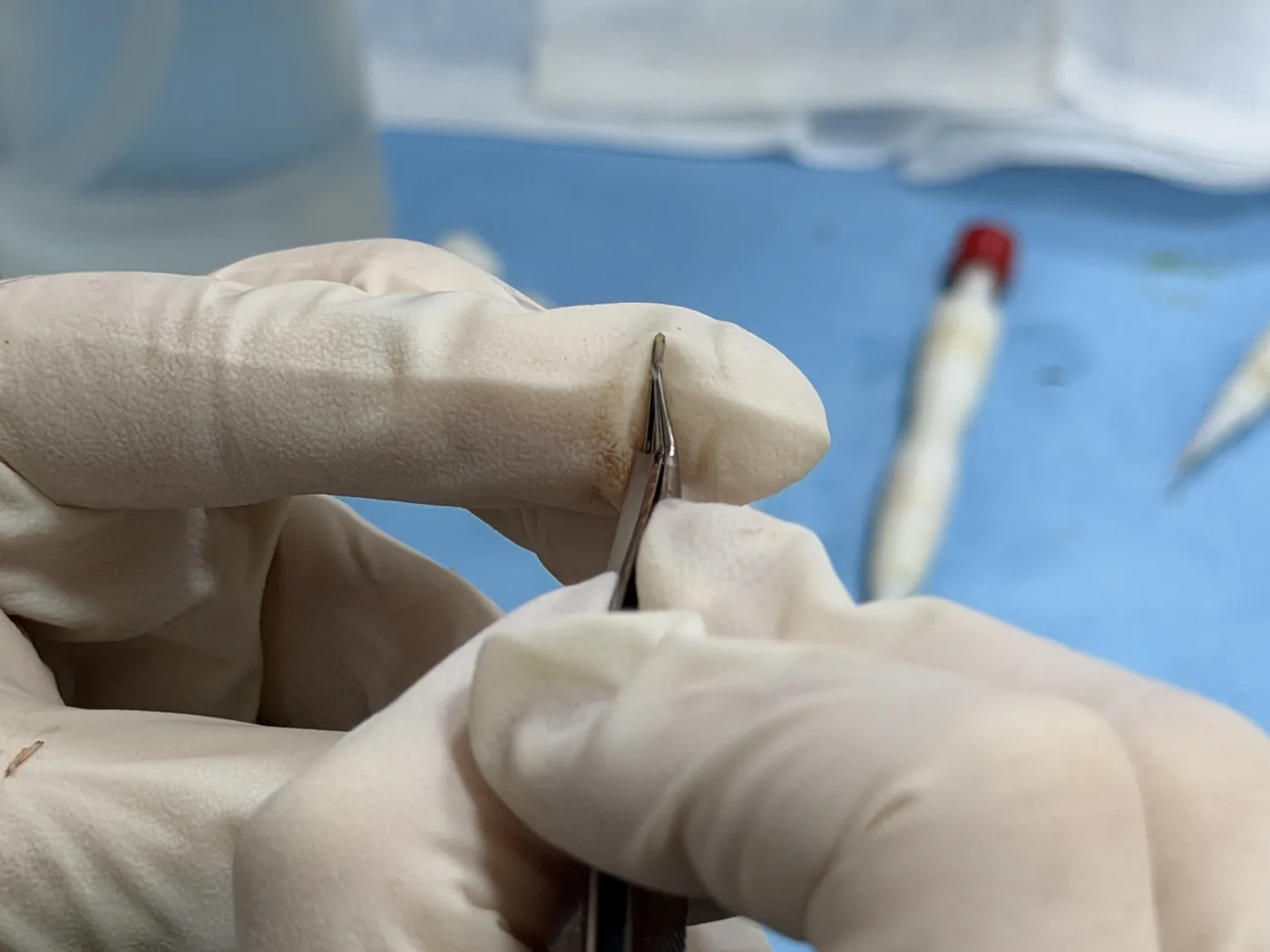
Sapphire vs Classic Steel FUE — The Difference
Both sapphire and classic steel FUE use the same FUE extraction technique. The recipient channel creation is the only difference:
- Steel blade FUE: Flat-cut incisions, wider channel profile, greater lateral tissue compression during graft insertion. Blades progressively dull during long sessions.
- Sapphire FUE: V-shaped incisions, narrower channel profile, less tissue displacement, consistent sharpness throughout. Allows closer graft spacing without tissue damage between channels.
The practical result: faster post-operative healing, less oedema (swelling), reduced risk of infection, and the ability to pack grafts more densely without compromising survival. For hairline work and crown density, sapphire is the superior option in most cases. For the decision between FUE and DHI (Choi pen implantation), see our full technique comparison.
Sapphire FUE at Hairmedico — The Procedure
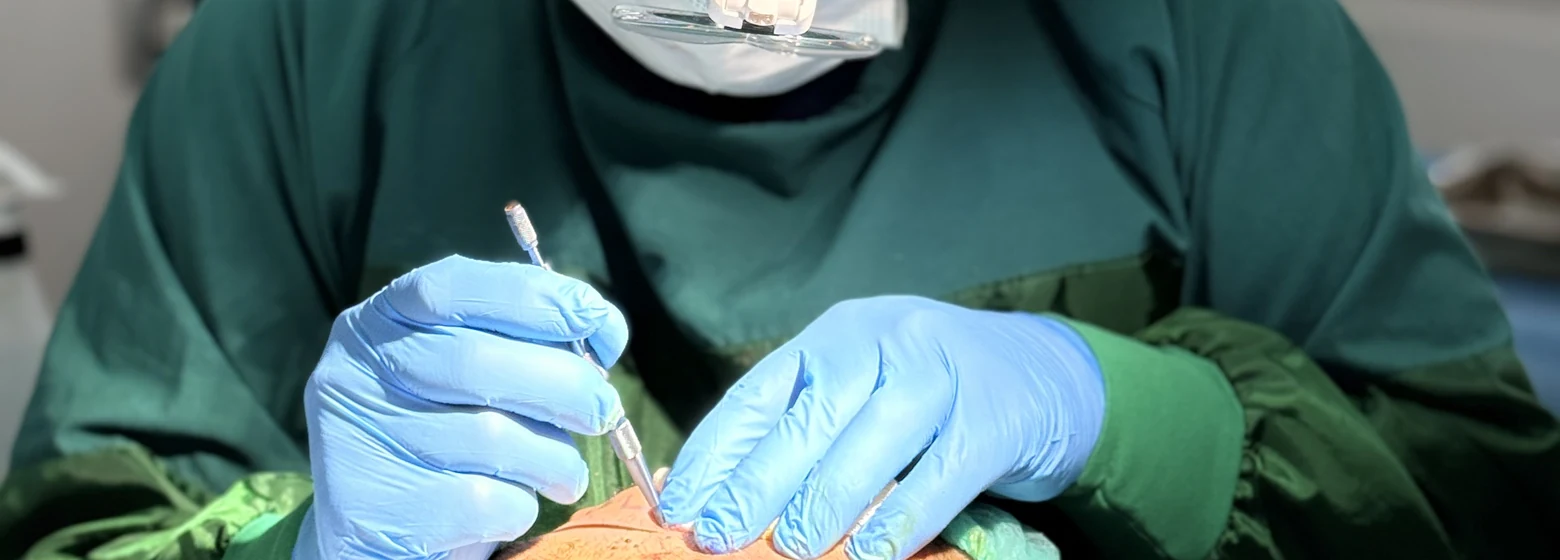
Extraction Phase
Identical to classic FUE: individual follicular units are extracted from the donor zone using a precision punch tool, following the Algorithmic FUE™ sequencing protocol to protect donor density over the long term.
Channel Creation Phase
Dr. Arslan uses sapphire-tipped blades to create recipient channels at precisely controlled angles, directions and depths. The gem tip creates a V-shaped incision that closes around the graft more tightly — improving graft stability immediately after implantation and reducing the risk of graft loss from friction or movement.
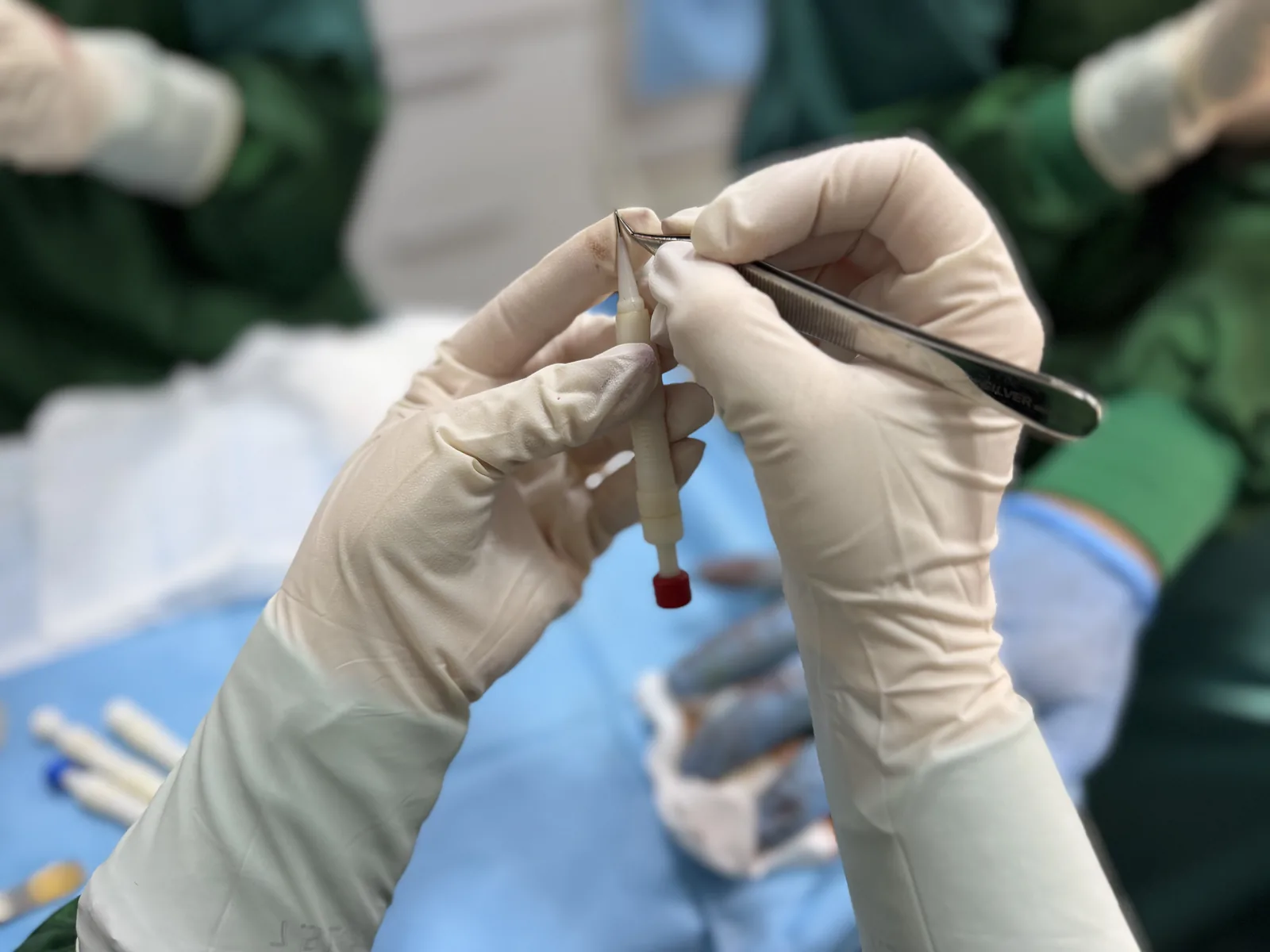
Implantation Phase
Grafts are placed into the sapphire channels using atraumatic forceps. The tighter channel profile means each graft sits more securely, with less gap between follicle and channel wall — supporting faster vascularisation (blood supply restoration) to the graft.
Clinical Advantages of Sapphire FUE
- Reduced post-operative swelling: V-shaped incisions displace less tissue than flat cuts — less swelling in the forehead and periorbital area in the days following surgery.
- Faster scab resolution: Cleaner channel edges close more uniformly — scabs form more evenly and resolve faster (typically 8–12 days vs 10–14 days with steel).
- Higher graft density: Narrower channels allow grafts to be spaced more closely without channels encroaching on each other — enabling denser packing in limited area.
- Consistent precision throughout: Sapphire tip maintains sharpness across a 6–8 hour session. The 2,000th channel is as clean as the 1st — impossible with steel over the same duration.
- Better graft stability: The V-channel grips the cylindrical graft more firmly, reducing the risk of graft displacement during the critical first days after surgery.
View real Sapphire FUE results from Hairmedico patients — filterable by technique, graft count and months post-procedure.