Overview
Hair
Transplant
Turkey

Surgeon-led hair restoration clinic in Levent, Istanbul since 2007.

Explore all →
Lorew Paris
Premium hair care by Hairmedico
Discover →
Confidential · Free
Bespoke Assessment by Dr. Arslan

Send 3–5 photographs. Personal response within 24 hours — no intermediaries.

Request Now →
17+
Years
1
Patient/day
Surgery
Techniques
& Procedures

Selected for your specific hair loss pattern and aesthetic goals.

FUE vs DHI →
Interactive Tool
Which Technique Is Right for You?

FUE, DHI or Algorithmic FUE™ — Dr. Arslan recommends based on your photographs and Norwood stage.

Get Assessment →
Try Graft Calculator →
Why Turkey
World-class
surgery.
Local price.

FUE Europe member. Ministry of Health accredited clinic. Levent, Istanbul — 60–80% less than UK or US.

View Package →
The Surgeon
Dr. Arslan
Musbeh

FUE Europe member. Ministry of Health accredited. 17+ years. 4,500+ personal procedures. One patient per day.

Full Profile →
Dr. Arslan · Istanbul
"One patient. One day. No exceptions."

Every graft personally placed. Every result personally accountable.

Read Philosophy →
17+
Years
4,500+
Cases
FUE
Europe
Pricing
All-Inclusive
Packages

No hidden costs. Hotel, transfers, surgery and aftercare in one price.

View Pricing →
Most Chosen
VIP — FUE–DHI

Silver · Gold · VIP — 5-star hotel · Airport transfers · PRP included

View Pricing →
Graft Calculator →
Results
Real
Before
& After

Every case personally performed by Dr. Arslan Musbeh.

Full Gallery →
Non-Surgical
Beyond
Surgery

Not every case needs a transplant. Medical treatments, therapies and specialist options.

Overview →
Medical Education
Learn
before
you decide.

Guides, tools and expert content — written by Dr. Arslan Musbeh.

All Articles →
Bespoke Assessment WhatsApp
Hair Transplant
Hair Transplant Turkey
Techniques
Techniques
Procedures
Why Turkey
Country Comparisons
Non-Surgical
Medical Treatments
Learn
Guides & Tools
Clinic Dr. Arslan Musbeh Pricing & Packages Before & After About Hairmedico Contact
MoH Accredited
1 Patient / Day
Reviews
Hairmedico Blog Technique Guides FUE vs DHI
HairmedicoBlog › Treatment Areas

Beard Transplant —
Complete FUE Guide

Treatment Areas13 minUpdated April 2026
Beard Transplant — Complete FUE Guide 2026

What is a beard transplant?

A beard transplant is a surgical procedure that permanently restores or creates beard density using FUE (Follicular Unit Extraction). Individual follicles are harvested from the scalp donor zone — typically the occipital and parietal areas — and implanted into the beard region at the correct angle and direction to produce natural-looking growth.
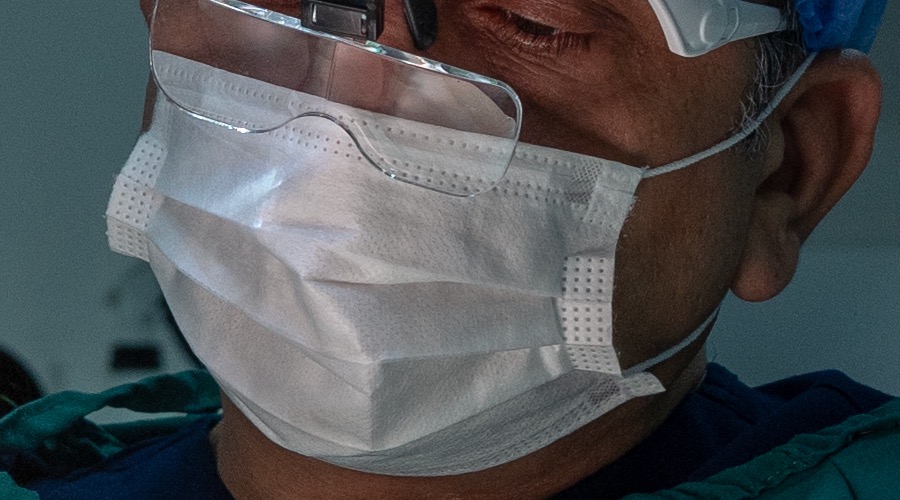
Hair transplant surgical procedure at Hairmedico Istanbul
Hairmedico Istanbul — Hair transplant surgical procedure at Hairmedico Istanbul

Transplanted beard follicles are genetically DHT-resistant. They grow permanently in their new location and behave identically to natural beard hair — they can be shaved, trimmed and styled normally from month 9–12 onwards.

Who is a candidate?

The most common candidates for beard transplant:

Candidacy requires adequate scalp donor supply and no active skin condition in the recipient area. Dr. Arslan assesses every case personally before confirming candidacy.

How many grafts?

AreaGraftsDuration
Full beard (cheeks + chin + neck)2,000–3,5006–8 hours
Patchy fill-in only500–1,5003–5 hours
Goatee only400–8002–3 hours
Moustache definition200–5002 hours
Sideburns200–6002 hours

These are estimates — exact counts depend on your existing beard density, target coverage and hair characteristics.

Istanbul — global capital of hair transplant surgery
Hairmedico Istanbul — Istanbul — global capital of hair transplant surgery

Why angle is critical

Beard hair grows at very specific, shallow angles — typically 20–30 degrees — and in a precise direction that varies across different beard zones. An incorrectly angled graft will produce a beard that looks artificial regardless of density.

At Hairmedico, Dr. Arslan personally maps the natural growth pattern of the patient's existing beard before surgery. Every implanted graft is placed at the anatomically correct angle and direction for that specific zone. This is why surgeon skill — not just technique — determines whether a beard transplant looks natural or artificial.

I spent two hours mapping the beard zone before a single extraction begins. The angle is everything. A beard grown at the wrong angle looks like a doll's beard — symmetrically dense and completely unnatural. — Dr. Arslan Musbeh

Donor grafts for beard transplant

Donor grafts are typically taken from the scalp — the occipital and parietal zones where DHT-resistant follicles are concentrated. In some cases, particularly when scalp donor supply is limited or when coarser texture is desired for a full beard, body hair (chest, back) can supplement scalp grafts.

For beard transplant, single-hair grafts are preferentially selected — natural beard hair typically grows as singles or loose doubles, so single follicular units produce the most natural-looking result in the beard area.

Recovery timeline

Days 1–3: Mild redness and small scabs in the recipient area. Scalp donor area has tiny puncture marks, typically invisible at normal hair length.

Days 4–10: Scabs loosen and fall naturally during gentle washing. Do not pick.

Weeks 2–4: Shock loss — transplanted hairs shed. The follicle roots remain intact beneath the skin.

Months 3–4: New beard growth begins. Fine, soft hairs initially.

Month 6: Significant growth visible — 60–70% of final result.

Months 9–12: Full result. Indistinguishable from natural beard hair. Permanent.

What results look like

Beard transplant results, when properly planned and executed, are indistinguishable from natural beard growth. The transplanted follicles grow hair with the same texture, rate and behaviour as the surrounding native beard.

Density expectations vary by hair type. Coarse, dark beard hair achieves the most visually dense result. Fine, light hair produces a natural but less dramatic improvement from the same graft count.

View beard transplant results →

Cost of beard transplant in Istanbul

Beard transplant at Hairmedico is included in the same all-inclusive package structure as scalp procedures. The total price depends on graft count. For a personalised quote — including a specific graft estimate based on your photographs — send images of your beard area (front, both sides) via WhatsApp or our contact form. Dr. Arslan responds personally within 24 hours.

Free assessment by Dr. Arslan Musbeh

Send 3 photographs. Personal graft estimate within 24 hours.

WhatsApp Dr. Arslan →

Free hair assessment

Send 3 photos. Dr. Arslan responds personally within 24h.

Get assessed →
Dr. Arslan Musbeh
Dr. Arslan Musbeh
Hair Transplant Surgeon · Founder, Hairmedico
FUE Europe Member · Ministry of Health Accredited · 17+ Years · 4,500+ Personal Cases
FUE Europe — Full Member 17+ Years · 4,500+ Cases
April 2026 Published April 17, 2026 Last updated Dr. Arslan Musbeh Medical review ~10 min Reading time
📚 Related Articles

Frequently Asked Questions

Can you transplant a beard?

Yes. Beard transplantation uses FUE to extract follicles from the scalp (occipital donor zone) and implant them in the beard and moustache areas. Results are permanent. At Hairmedico, Dr. Arslan personally designs the beard line and performs the complete procedure.

How many grafts does a beard transplant require?

Patchy beard coverage: 500–1,500 grafts. Full beard from minimal growth: 2,000–3,500 grafts. Full beard including moustache and neck line: 3,000–5,000 grafts. Precise requirements depend on the coverage area and target density.

Is beard transplant painful?

No. Beard transplant is performed under local anaesthesia. At Hairmedico, the Comfort-in needle-free injector eliminates the sting of anaesthetic injection. The procedure is comfortable throughout — most patients read or watch films.

What is the recovery time for beard transplant?

Similar to scalp transplant. Scabs at implantation sites clear by Days 10–14. Shock loss (temporary shedding) occurs at weeks 2–5. New permanent beard growth begins at months 3–4. Full result at months 9–12.

References & Sources
  1. Onda M et al. Follicular unit extraction: A systematic review of the literature. Journal of Plastic, Reconstructive & Aesthetic Surgery. 2020. https://doi.org/10.1016/j.bjps.2019.11.006
  2. Bernstein RM, Rassman WR. Follicular unit transplantation: 2005. Dermatologic Clinics. 2005. https://doi.org/10.1016/j.det.2005.01.007
  3. Avram MR, Rogers NE. Contemporary hair transplantation. Dermatologic Surgery. 2009. https://doi.org/10.1111/j.1524-4725.2009.01338.x
  4. Bernstein RM. Follicular unit transplantation. Dermatologic Clinics. 2013. https://doi.org/10.1016/j.det.2013.06.002
  5. Limmer R. Elliptical donor stereoscopically assisted micrografting. Dermatologic Surgery. 1994. https://doi.org/10.1111/j.1524-4725.1994.tb01661.x
  6. American Academy of Dermatology Association. Hair loss: diagnosis, treatment and outcome. AAD Guidelines. 2023. https://www.aad.org/public/diseases/hair-loss/treatment

All references are peer-reviewed medical literature or official health authority publications. No commercial sources included.

class="bp-rel">

Related articles

Verified Patient Reviews

Trustpilot — In their own words.

After researching countless clinics, I specifically didn't want a "hair mill." Dr. Arslan is hands-on throughout the entire process. I came from Australia and the experience was seamless.

Dr. Arslan was present throughout the surgery and personally performed the majority of key procedures. His professionalism and dedication made all the difference.

I already see good hair growth after only 17 weeks. The professionalism of the team and facilities was excellent.

Dr. Arslan was incredibly professional — he explained all procedures clearly. The clinic was spotless and the staff were super friendly.

From first contact, communication was prompt, transparent and efficient. My expectations were surpassed by the services and attention I received.

After 5 years of research I chose Hairmedico. Even on a basic package, Dr. Arslan performed the critical incision phase himself.