Can women get hair transplants? Who qualifies, which techniques work best for women, and what results look like. Dr. Arslan Musbeh, Hairmedico Istanbul 2026.
Which women are good candidates?
Female hair transplant candidacy is assessed differently from male candidacy for one key reason: female hair loss patterns are more diffuse. In men, pattern baldness typically creates clearly defined bald zones with a dense donor. In women, the donor zone may be less dense if female androgenetic alopecia is diffuse.
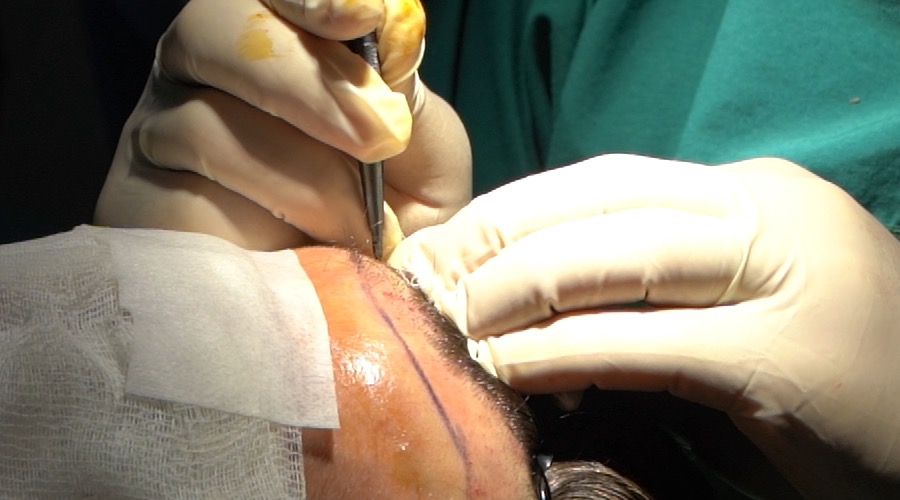
Good female candidates have: stable hair loss over 12 months, preserved donor density at the back and sides of the scalp, a defined area of loss (not diffuse loss over the entire scalp), and realistic expectations about achievable density.
Women are not good candidates if: loss is diffuse across the entire scalp including the donor zone, the underlying cause is active autoimmune alopecia, or hair loss is active and accelerating. In these cases, medical management must precede surgery.
Why DHI is the preferred technique for most women
Most women seeking hair transplant have existing hair throughout the recipient zone — whether diffuse thinning or partial hairline loss. DHI (Direct Hair Implantation) is specifically designed for this scenario: the Choi implanter pen places grafts without pre-creating channels, eliminating the risk of damaging adjacent existing follicles.
DHI also enables unshaved procedures for most female cases — the existing hair is gently moved aside rather than cut. This allows women to maintain their hairstyle throughout the recovery period, with the transplanted hair growing in gradually and invisibly integrating with the existing hair.
Unshaved DHI at Hairmedico — complete discretion
For female patients who cannot tolerate any visible sign of surgery during recovery, unshaved DHI provides complete discretion. The procedure leaves no cut hair, no shaved zones visible, and no obvious sign that a procedure has taken place. The transplanted hair sheds at weeks 2–5 (shock loss) and regrows from month 3–4 — all while existing surrounding hair remains at its natural length.