Hair transplant repair and correction surgery: what can be fixed, what cannot, how to assess a failed transplant and what the correction process involves.
What constitutes a hair transplant that needs repair?
Not every dissatisfied patient has a failed transplant — some have unrealistic expectations of a technically sound procedure. But there are specific clinical presentations that genuinely require corrective surgery:
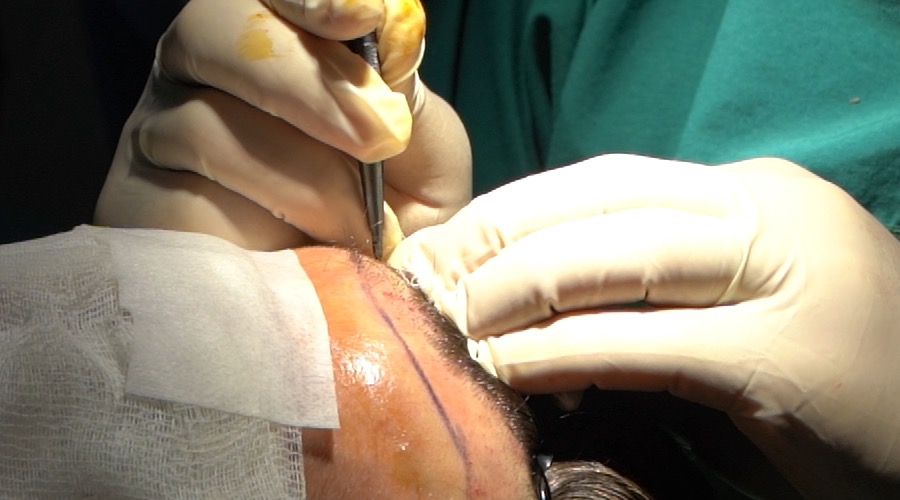
- Unnatural hairline: Too low, too straight, wrong angle or visible plug-like groupings
- Wrong direction: Grafts implanted at incorrect angles that grow outward rather than forward
- Poor density distribution: Dense patches adjacent to thin areas, creating a patchy appearance
- Visible plug scarring: From older FUT or large-punch FUE techniques
- Over-harvested donor zone: Visible thinning or patchy appearance at the back of the scalp
- Island effect: Transplanted hairline surrounded by continued native hair recession, creating isolated patches
Assessment — what can actually be corrected
Before any corrective surgery is planned, a thorough assessment is essential. This includes:
Donor assessment: How many grafts remain available? If the original procedure over-harvested, correction options may be limited. Trichoscopy scanning maps remaining density.
Recipient assessment: What specifically is wrong? Hairline position? Graft angulation? Density distribution? Each problem requires a different corrective approach.
Scar tissue assessment: Prior surgery creates scar tissue that affects blood supply and graft survival in re-operated zones. Dense scar tissue reduces expected survival rates.
At Hairmedico, we accept patients for corrective consultations regardless of where their original procedure was performed. An honest assessment of what is and is not correctable is provided before any commitment to surgery is requested.
Corrective techniques
Hairline reconfiguration
If the original hairline is too low or too dense, options include: adding grafts behind the existing hairline to create a more natural graduated transition; removing incorrectly placed grafts (using a small FUE punch to extract and discard or reposition them); or using laser or electrolysis to eliminate individual misplaced follicles.

Density redistribution
Dense areas can be surgically thinned; thin areas can receive supplementary grafts. In both cases, outcomes are limited by available donor supply and the graft survival rates achievable in a previously operated scalp.
Donor zone repair
Visible over-harvesting at the back of the scalp can sometimes be improved by transplanting body hair (typically beard) into the most visibly depleted areas. This is a limited solution — body hair calibre may not match scalp hair — but it can reduce the appearance of donor scarring.
What repair surgery cannot do
Correction surgery is more limited than primary surgery in several important ways. Scar tissue from the original procedure reduces blood supply and graft survival. Donor supply is already partially depleted. The scalp has already undergone trauma that affects healing predictability.
Managing expectations is the most critical part of any repair consultation. Some situations — severe over-harvesting, severe hairline positioning errors — have limited corrective options regardless of the surgeon's skill. Being honest about this is more important than promising outcomes that cannot be delivered.