Surgeon-led hair restoration clinic in Levent, Istanbul since 2007.
Explore all →Send 3–5 photographs. Personal response within 24 hours — no intermediaries.
Request Now →Selected for your specific hair loss pattern and aesthetic goals.
FUE vs DHI →FUE, DHI or Algorithmic FUE™ — Dr. Arslan recommends based on your photographs and Norwood stage.
Get Assessment → Try Graft Calculator →FUE Europe member. Ministry of Health accredited clinic. Levent, Istanbul — 60–80% less than UK or US.
View Package →FUE Europe member. Ministry of Health accredited. 17+ years. 4,500+ personal procedures. One patient per day.
Full Profile →Every graft personally placed. Every result personally accountable.
Read Philosophy →No hidden costs. Hotel, transfers, surgery and aftercare in one price.
View Pricing →Silver · Gold · VIP — 5-star hotel · Airport transfers · PRP included
View Pricing → Graft Calculator →Not every case needs a transplant. Medical treatments, therapies and specialist options.
Overview →Guides, tools and expert content — written by Dr. Arslan Musbeh.
All Articles →
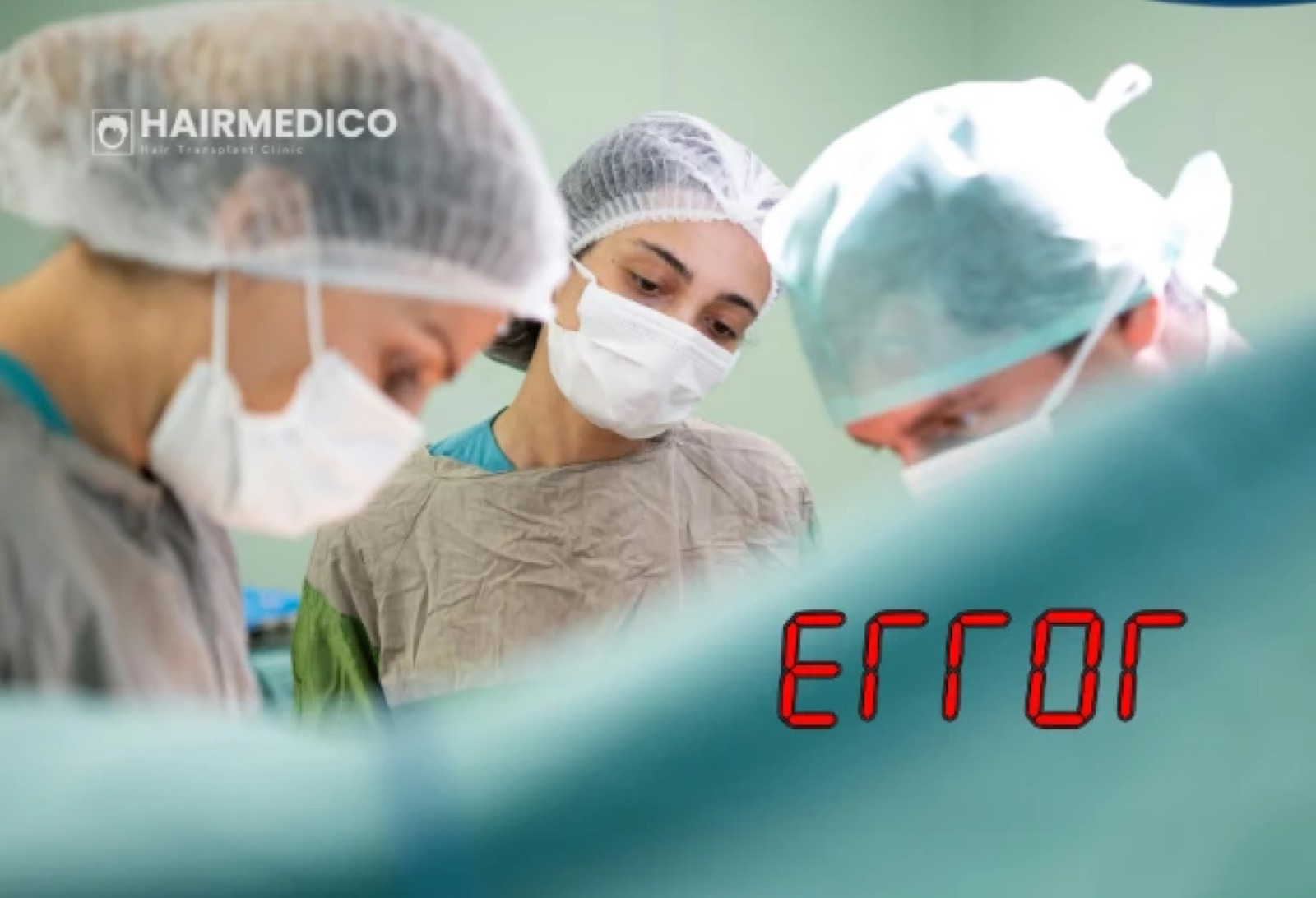
Hair transplant failure is not binary. It exists on a spectrum:

If the extraction punch cuts through the follicle shaft during harvest, the graft is permanently destroyed. Transection rates in high-quality surgeon-led clinics: 2–5%. In poorly trained or technically inadequate procedures, rates of 20–50% have been documented. Every transected graft is a permanently wasted donor follicle.
Extracted follicles are living tissue. Out of body, without temperature control and hydration, they begin to die within minutes. Acceptable out-of-body time is a maximum of 4–6 hours. Clinics processing multiple patients simultaneously with shared technical staff often exceed safe out-of-body times.
Grafts implanted at the wrong angle grow in the wrong direction — outward rather than flat, or against the natural hair flow. Individually, each graft survives. Collectively, the result looks artificial and cannot be styled naturally.
In high-volume clinics, extraction and implantation are frequently performed by unlicensed technicians rather than surgeons. Technicians lack the anatomical training, diagnostic skill and aesthetic judgement required for consistently good outcomes — particularly in complex cases.
A complete failure — zero growth — is extremely rare in properly performed procedures. Partial failures are more common: reduced density from poor graft survival, unnatural results from wrong hairline design, or visible donor thinning from over-extraction. These are surgical quality failures, not random outcomes.
The main causes are: high follicular transection during extraction (damaged grafts), excessive out-of-body time (follicle death before implantation), incorrect channel angles (grafts grow in wrong direction), over-harvesting of donor zone, and poor aftercare leading to graft dislodgement.
Choose a surgeon-led, accredited clinic with documented graft survival data. Verify credentials independently. Ask who personally performs the surgery. Follow post-operative care instructions exactly. The single most important prevention is surgeon selection.
All references are peer-reviewed medical literature or official health authority publications. No commercial sources included.